
Sharing Communities
- At November 04, 2016
- By anneblog
- In Annes Letters
 0
0
Recently I had the pleasure of reading an article in The Catholic Worker about one of its Hospitality Houses, St. Joseph’s. It was written by a volunteer, Megan Townsend, who regularly goes there to serve and to socialize with the many others who grace St. Joe’s with their unique and important presence.
The more I read this short, but profound article, the more I realized it reflected much of what Imai Sensei’s Yomawari does for the homeless here in Sendai. Let me quote a few excerpts to illustrate what I mean.
“As I volunteered more often and got to know this … interdependent community, it felt a lot less like service and a lot more like sharing . . . As I watched people on the house at St. Joe’s greeting people . . . I observed this casual ease of giving.
“. . . I admired the way they would act as if giving away whatever they could was just something they should do. It is natural . . . I would watch volunteers at St. Joe’s ask someone their name, shake their hand, and then joke with them as if they had known each other for years (which in some cases they have!) . . . Asking someone their name is just the beginning of the relationship, an invitation to community.
“The importance of humanizing each other . . . (allows each of us to) feel known and loved . . . My greatest joy is . . . making acts of serving (be) . . . familiar rather than impersonal.”
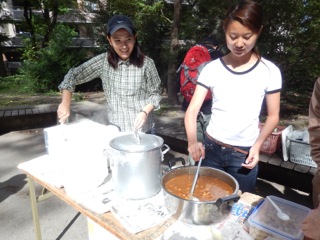
Last week I had the privilege of taking two students to volunteer at Imai Sensei’s soup run. One had been before, and since the experience impressed her so deeply, she asked a friend to join her. It was lovely watching them interacting with the men and women, both volunteers and guests. They treated all the people there with great kindness and respect, just as they themselves were treated.

Love,
Anne
Arahama & Mosul
- At October 18, 2016
- By anneblog
- In Annes Letters
- 0
Every morning when I greet the dawn, I wish that I were by the sea. As I watch light slowly unfolding the day, I can easily sense the ceaseless rhythm and energy that only waves, tides, and the vast expanses of sky can bring. Today after my morning ritual, I went inside and listened to the news. I learned of the well-planned offensive to recapture Mosul from ISIS’s relentless strangle and grasp. I thought of the ensuing, bloody tug of wars, ferocious between all sides. Each has strong beliefs and accepts that death is a necessary part of change. The more it dawned on me what lay ahead for Mosul, for all concerned, the more I felt the literal pull of the sea.
The coast is easy to get to from Sendai and does not take long. So, I heeded my intuition and went. I passed newly built homes, sadly with no grass, no trees, no gardens. I wondered what sort of mental and emotional world we have been creating since Tohoku’s life-altering events of 2011. Where is the famed Japanese connection to nature and to land? But thankfully, further on we passed newly harvested rice paddies and barns filled with tools to work our precious earth.

Arahama, the shore area, had not changed much since last March when I went there to pray for the soul of the dead. Huge trucks still lumber by, explanatory bulletin boards dot construction sites, and the tsunami-damaged school is still standing, and will continue to do so as a memorial to what people lost or left behind.


Pulled by the cyclical call of the tides, I worked my way to the beach. Once there I thought about Nature and death, of war and death. I pondered whether at this stage in humanity’s eternal evolution we need to fight, to have a life-threatening challenge to pull us decisively away from noise and glut and even wisely given counsel, so as to discover our own unique voice and the ground of who we are. Are we yet consciously our core?
The waves rolled and I felt the eternal dance of earth with moon. I watched the resultant tides, smooth today, but always harboring the possibility of turbulence and destruction within. I also deeply felt the horror of misplaced idealism, coupled with tribal wars: Mosul today, the world past and tomorrow.

Conflict and destruction are innate in all expressions of existence. But equally so, maybe more so, are harmony and efforts to transform the past and shape a world that is fair and honors all.

Love,
Anne
Yasukuni Shrine, Part II
- At October 02, 2016
- By anneblog
- In Annes Letters
- 0
War is something that I cannot get my mind around. It is completely incomprehensible to me. But precisely because wars are so prevalent today, I feel an urgency to try and understand why people resort to violence to solve their controversies. And coupled with that questioning is the universal tendency to highly revere soldiers who die in combat, no matter how alarming or questionable the conflict may have been. This effort to understand is not to condone war, not at all. It is rather a desire to get a glimpse into the psychology behind that unfortunate choice of behavior.
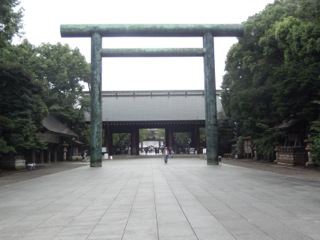

I wandered slowly and found monuments in honor of all those who sacrificed in war: from combat horses to mothers and wives grieving their slain loved ones. The sincerity and devotion of worshippers struck a deep cord, as one after another bowed, clapped twice, prayed, and bowed again. There was a sense of being absolved, of purifying one’s inner and outer being in order to move out into the world with greater clarity and purpose.
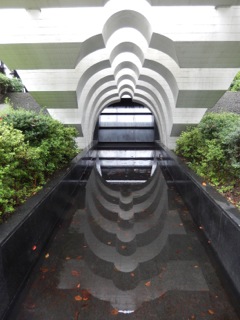
The energy at Yasukuni Jingu was intense, but subtle. Even though the shrine is relatively new, the long stretch of history could be felt everywhere, rising from the rich black earth of the complex itself. The accompanying museum depicted this land’s wars for literally 1000s of years as it struggled with shifting identities and changes in power.
Earlier eras seemed to express the “Art of War” with magnificent armor and breathtaking swords made by master craftsmen. As history worked its way closer to the 20th century, however, the horrors of conflict became more apparent and relentless.
What touched me most deeply in recent wars was a replica Kamikaze airplane. It was suspended graciously from the ceiling, a delicate Sakura blossom on the tip, a round red sun behind. I could sense the vulnerability and resolved determination of those highly intelligent, acutely aware young men, consciously flying to their deaths.
I thought of today’s terrorists and wondered what contrasts and parallels will be found as research opens up some of the unanswered complexities of past and current wars stemming from people’s troubling beliefs and actions.
Yasukuni Jingu is indeed a very meaningful Japanese memorial.

Anne
(1) Even though the friend who told me about his meaningful visit to Yasukuni Shrine equating it with the Budou Mind, other Japanese friends challenged that belief. They pointed out that the Budou Mind existed long before Yasukuni Shrine was built. And in fact, its purpose was in direct contrast to it.
The Budou Mind has been used for centuries for physical, mental, and spiritual training. The Boshin War ended the rule of the Shogunate, ushering in the Meiji Era in 1868. At that time Japan wanted to reestablish the Emperor system and become more like the West. She wanted to do away with traditional, “outdated” forms of military and mental preparedness that the Budou training represented. Therefore, the fine art of Budou was downplayed in order for Japan to become more “forward thinking” and to “catch up” with Western powers.
More specifically, Yasukuni Shrine is devoted to Japanese who fought and died for the Empire of Japan, which existed from 1868 to 1947. That is, from the reestablishment of the Emperor system in the Meiji Era through the Taishou and part of the Showa Periods.
Other buildings in that complex honor non-Japanese who served Japan. And yet another building commemorates all those who died in WWII, no matter their nationality. There is also a museum that depicts the history of conflicts in this archipelago for over 2300 years.
By equating Yasukuni Jingu with the Budou Mind, my friend has blended Budou with Japanese nationalism. However, they are actually very distinct, even directly opposed to one another. In fact, in today’s Japan, religion and politics are separate. No Japanese Emperor has ever visited Yasukuni Shrine since WWII, although several Prime Ministers have.
In 1952, over 40 million’s signatures were gathered by Japanese people in order to acquit A, B and C class war criminals. The number of signatures were about half of the population at the time. Then the Japanese government decided that they weren’t criminals anymore at least in Japan. Although it doesn’t mean Asian neighbors think the same way and the Tokyo Trial is overturned, it is no doubt about the half of Japanese at that time forgave them. I personally think the militaristic government are responsible for the war as a top, but I want to value the decision by the Japanese people.
Yasukuni Shrine, Part I
- At September 24, 2016
- By anneblog
- In Annes Letters
- 0
Yasukuni Shrine is extremely controversial. It is a Shinto Shrine that was built to commemorate Japanese war dead. Every country honors its fallen soldiers. So in that way Yasukuni Shrine is not unique. But what makes it questionable is that WWII convicted Class-A war criminals, performing crimes against humanity, are also interred there. And in the past few years, several Prime Ministers have gone to pay their respects to fallen heroes, not distinguishing between those who served the country honorably and those who abominably abused their positions of power. (1) Understandably, countries neighboring Japan are furious by the overt display of nationalism that these visits by Prime Ministers seem to suggest.

I personally detest war. Of course, I recognize any body’s need for an immune system, and a country’s obligation to protect itself. So, I understand the necessity of a military, even though I would love a world where the armed forces were obsolete: a world mature enough to dialogue solutions to conflict, and willing to work for the whole of humankind, not narrowly focused on national self interests. But that is wishful thinking, and I know it.
The other day a friend, a man who has practiced Kendo for years, told me of his recent visit to Yakukuni Shrine.

“Because the Japanese Mind is so strongly felt there.”
“The Japanese Mind?”
“Yes, Budou, ‘martial arts’, as you say in English. But that is not a good translation. It only touches the surface. The Budou Mind covers so much more, is so much deeper. It entails every ounce of our being, our keen focus, our complete Heart, our total Mind.
“But it is more than that, too. It is a discipline, a training that guides us to become not only single-mindedly focused, but also very intuitive. It is as if our whole being is open, listening, receptive. And in that state, we give, even as we receive what our surroundings have to offer and what we ourselves emit. It is a sacred experience. It is the unique Japanese way of being in the world.”

“Sorry, I don’t understand.” I said in wonder, “Is this allowed only to Japanese, or can others develop it also? Are Japanese born with it, or must it be trained into them?”
He went on to say, “We are this from before we were conceived. It is our soul. It is all around us. It is part of our traditional culture. It is how our society operates.
“One everyday example is gift giving. Whenever we meet someone, we take a gift. It is a way to honor that person. It shows our humility and respect for them. It is also a subtle way of honoring the gods. ‘I recognize the god in you’, as we bow before that person, offering our gift. In turn we receive the joy that can only come from giving.”
“But . . . but what does this have to do with your need to go to Yasukuni Shrine?” I asked, still uncertain.
“Everything.
“Budou energy is highly concentrated there. Even though it is often full of people demonstrating against war, the place is profoundly peaceful. Silent, deeply silent. Going there put me in touch with what it means to be Japanese in the truest sense of the word.”
“As a Japanese? Is that where you place your identity?”
“I place my identity not in this country, but in its Mind. It is subtle, it is deep, it goes to the core of my being. While at Yasukuni Shrine, I feel that power with every part of who I am.”

I thought about what my friend said, but was still very uncertain. I realized that my attitude was strongly influenced by what I had read of Japan in WWII. One small aspect of that complex and controversial issue was the plight of Kamikaze pilots. The militaristic government had taken the cream of what Japan had to offer — the best educated, the most cultured, the most intelligent young men — and had forced them to commit suicide for its own distorted purposes of nationalism, ego, and power. It covered over this vile abuse of the Budou Spirit by comparing those young men to the gracious, ephemeral beauty of cherry blossoms. How can Yasukuni Jingu be a spiritual place if such poisonous energy is an integral part of it?
“Anne, Anne,” he said to me, “the men at the top of the military government during WWII were the epitome of evil. Their sick minds and actions caused tremendous suffering. There is no doubt about that. But you have to look deeper. If you go down to the very foundation of life itself, you do not find evil. You find purity. You find goodness. You find an openness that can only express the essence of God, manifested in the very soul of humanity.
“The Kamikaze pilots did what they had to. They were forced to do it. If they had resisted, not only would they have been tortured and killed, but their families and anyone connected to them would have been severely punished, most probably murdered. The Kamikaze pilots did what they did in order to protect those they loved and who loved them. That is where they were great. That is where they were heroes. That is where they manifested the Budou Spirit.”

My friend’s words fascinated me. And because I always wish to test my own beliefs, I have decided to go to Yasukuni Jingu and see for myself what the place has to offer.
Love,
Anne
(1) For Japanese anyone who died for the country immediately becomes a “Kami”, or a god. In fact, according to Japanese Buddhism, when we die, we shed our human element, and become pure, divine essence.
Obon: Union of Heaven and Earth
- At August 15, 2016
- By anneblog
- In Annes Letters
- 0
Every year in mid-summer when rice paddies are poignantly green and fields are joyous with produce, three very special days, called Obon, are set aside for worship and for prayer. During that period, ancestors make a sacred and special pilgrimage to this earth’s dimension. They long to commune, to bless, and to be with those they left behind.

In return, the living flock to graves, adorning them with flowers, incense, sake, and prayer. Cities vacate as people return to hometowns, to the beloved land that holds generations of family devotion, duty, and bonds.

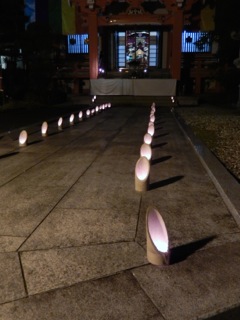
At night in particular the souls of the deceased come alive, haunting graveyards and temples. They are seeking loved ones, hovering close, eager to give needed assistance and care.

Anne
Misaki’s Research Project
- At July 27, 2016
- By anneblog
- In Annes Letters
- 0
Dear Family and Friends
One university where I teach is for women from well-heeled families. Most of the students are intelligent and motivated, so it is a pleasure working with them. My writing classes are particularly satisfying because the students’ steady progress can so clearly be seen. So, I like to give them as much responsibility for their own learning as I can. If they are exceptionally eager and well prepared, I encourage them to do an independent research project.
This semester one student, Misaki, chose a topic that came directly from her own experiences. Last year she went alone to Los Angeles and this year to New York. She loved them both, and wants to return to America someday. But what disturbed her was the number of homeless people she saw. “Seeing those people really shocked me. I couldn’t imagine a life like that. It was so unsettling that it made me want to know more about this situation. That’s why I chose the research topic of homelessness.”
Her exploration has lifted her out of her comfortable worldview. Her upbringing and Japanese media never allowed her to see what was actually going on around her. But suddenly she sees street people everywhere. “They’re a lot quieter here than in America,” she observed. “They don’t sit on the street with a cup and a sign begging for money. In fact, they seem to be saying, ‘Don’t notice me, please.’ But even so, they are everywhere here: in parks, in train stations, in underground passageways. I’m amazed.”

Of course, I encouraged Masaki to volunteer at Imai Sensei’s Yomawari Group. That day she helped dish up rice.

And then she assisted men to select a nice shirt or trousers.

“These people are so polite. My image is changing once again. I went from the idea that there were no homeless here to being rather afraid of them. But now I see they’re people just like you and me. There’s such a thin thread between having a normal life and living on the street. I am surprised to find myself admiring these people very much. Life is really hard for them. And what sort of a future do they have? But they don’t give up. And today some of the men even told jokes and got everyone laughing.
“Wow! I have so much more to learn. My outlook is changing rapidly. So, I have to stay open so my opinions can keep pace with my experiences. Mind and heart: it’s important they work together as a team.”
Later I got a message from Imai Sensei. His weary outlook is also grounded in years of direct experiences. “We have some new comers – I mean, homeless people — this time, too. Some of them are in their 20s. We are afraid that they were sent to a construction site by a bad broker, who pockets a kickback from their wages. Sometimes they realize what is going on after a few months. Only a few of them {the bad brokers} are accused, because most workers are scared of YAKUZA.”
The problems are very deep. And that makes us even more aware that our humanity is one.
“Kizuna” — we are here to help each other.

Love,
Anne
六魂祭 Rokkonsai: Six Spirits Festival
- At July 27, 2016
- By anneblog
- In Annes Letters
- 0
“Kizuna” in Japanese means “emotional ties”, “relationship”, “close connections”. It also implies joining and working together as a unit.
Kumamoto here in Japan is another. Earthquakes, landslides, devastation, are all being met with an incredible sense of working together, of helping each other survive.
The Kizuna spirit that emerged in Tohoku in 2011 is world renown. It held us together, giving us courage to move forward, keeping us alive.
Fukushima’s Waraji


Iwate’s Sansa Odori

Yamagata’s Hanagasa


Aomori’s Nebuta
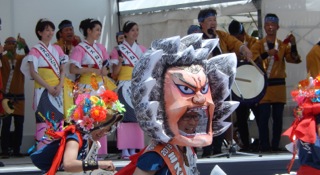
This joyous and powerful expression of Hope through Unity has been repeated every year since 2011. But this year, the sixth, marked this final combined celebration. And what a glorious grande finale it was.
Anne
The Still Small Voice: OISCA
- At July 27, 2016
- By anneblog
- In Annes Letters
- 0
Dear Family and Friends,
Worry. Apprehension. Fear.
The hallmarks of our era.
Whatever shocks and awes absorbs our greatest attention.
Extremes are never enough.
Amid the noise, where is the promised Still Small Voice?
Does it exist?
Has it ever?
If so, how can we find it;
Open our hearts to it; allow it to flood our being?
Not as a tsunami.
But as pre-dawn sunlight awakening the day.
The great unfolding of night, of sleep, of dream.
The intuitive hovering of animals.
Or the promise of plants.
Emerging out of darkness.
Silent, ever unfolding.

Stillness is everywhere.
Always.
It is our eyes and hearts that need to see, to feel, to open.
A forest planning-planting NGO.
Generations of promise.
Life slowly taking hold.
Whole forests emerging out of devastation and human toil.
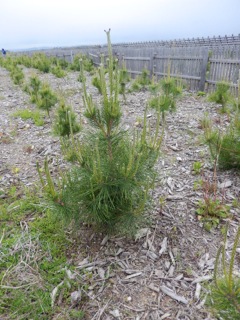
One Still Small Voice.
Steadily at work.
Rebuilding lives and hope, in the midst of today’s chaotic world.
One Still Small Voice —
for a thousand years.
Love,
Anne
P.S. Is it by coincidence that as OISCA members planted trees on Saturday, the G7 met in Sendai to discuss the future of the world?
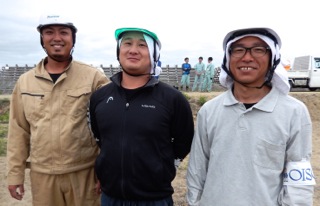
P.P.S. Today’s volunteers came in all shapes and sizes.


Yomawari and New Greens
- At July 27, 2016
- By anneblog
- In Annes Letters
- 0
Dear Family and Friends,
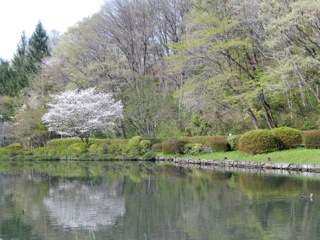
Some Japanese say they love “shinryoku”, new greens, even more than Sakura. The freshness of emerging life is uplifting and joyous. Many people celebrate by taking walks in the park or strolls along riverbeds.
I had not been to help Imai Sensei feed the homeless for several months. But recently I had time, so decided to go. En route there I came across students asking for donations for the victims of the Kumamoto earthquake. I met the same later in several other places. Many kind souls helped us in our time of great need, and still are. So we feel a particularly deep bond with those suffering today, albeit far away. And therefore, we give, we share. And that makes us feel happy.

When I arrived, the park where Imai Sensei’s Yomawari NGO meets was full of kids playing ball, swinging and sliding, shouting and laughing, delighting in the freedom offered by that beautiful spring day. Gradually, like quiet birds, one homeless after another began to arrive. They sat on benches in the sun, waiting for the food truck to arrive.

Yomawari volunteers are like professionals now. After years of running the program, they know just what to do. Within minutes everything – food and clothes – were ready.

Recently there have been fewer partakers. That is because some now have a room, provided by either the city or NGOs. They have to pay a minimal rent, but some of these gentlemen receive social security or a pension. Others find odd jobs, like cleaning Sendai Station before dawn. Likewise, many still go to Fukushima to help clean the nuclear plant there. And now maybe some will find their way to the far south, to Kumamoto, to lend their efforts there. That leaves mostly old men as the ones who rely on Imai Sensei’s ongoing generosity and kindness. Despite the fewer numbers, often young students volunteer serving food and handing out clothing.
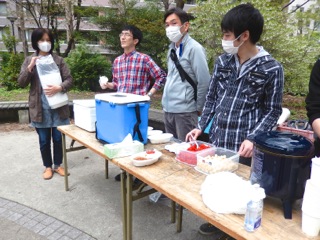
Compared to other places, Sendai’s homeless count is not particularly high, a few hundred. But that number does not include the people who while away time in internet cafés or other accepting places that never close. It also does not include those without jobs, but are lucky to have a place to live.
Yomawari is unique in that it provides showers and laundry several times a week. Most often the clothes are folded neatly, but returned wet. The men graciously accept them and head to parks or riverbanks, where they spread them out to dry.
“This season is particularly good for that,” one volunteer told me. “The rainy season has not started. And it is warm and beautiful.” Then she added, “Aren’t the ‘new greens’ reassuring? Doesn’t this season make sharing easier? And doesn’t sharing make everyone feel happier?”

Love,
Anne
Earthquakes and Sakura
- At July 27, 2016
- By anneblog
- In Annes Letters
- 0
Dear Family and Friends,
Several days ago there were two massive earthquakes in Kumamoto, a prefecture far to the south of where I live. Buildings tumbled, people died, and water and electricity were cut. Even now many are still housed in shelters, while aftershocks and mudslides continue to threaten both cities and towns.
Rescue workers and relief efforts are in full force as the area struggles to contend with the ongoing physical, emotional, and mental devastation. Those professionals are exceedingly well trained and prepared, so locals, although shattered, know they are receiving the best assistance possible. Likewise, miraculously, as of now all tsunami warnings have been lifted. And the nearby nuclear plant, ironically in a place called Sendai, is reported to be undamaged and functioning properly. These important things provide a flicker of hope in this time of great trauma and despair.
The intensity and tragedy of this situation are a definite reality of the complexity of the Japanese experience. Yet even as this nightmare overwhelms people in Kyushu, and our sincere concerns, prayers, and assistance extend to them, we know and have to accept that sadness is never the full picture. Japanese innately know that whatever is true is always balanced by its opposite, which can be equally as true, and often happening at the same time. Indeed, one such counterpoint to the Kumamoto tragedy is the delicacy of Sakura, cherry blossoms. They are coming to full expression throughout the nation at this very moment.
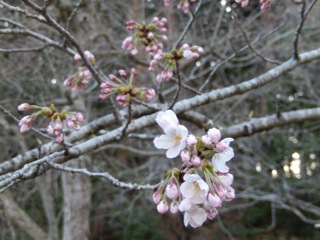
Even though Sakura seem ethereal, light, and joyous, they, too, convey a multitude of profound meanings. Throughout the centuries they have symbolized the complete cycle of life – from the joy of birth to the inevitably of death. Their delicate petals suggest the fragility and shortness of youth, and call on us to appreciate ephemeral beauty while it lasts. Yet, the thick, gnarled trunks promise us longevity, along with the necessity of obligation. These dark, twisted beings, often with only a shell remaining, have the privilege and power to support new life as it delights in its earliest expression. Yet they later work to feed the leaves in summer and protect dormant life in winter. And precisely because of this ongoing nurturance and annual recycling, the beloved Sakura shower us with the hope of rebirth and eternal life.

The blooming of Sakura is a cause for celebration. Starting in the south and moving northward, blossoms offer their shy message of hope and of joy. North of Sendai, Miyagi, the flowering occurs rather late. That enables the delicate cherry to brush the festivities of early May, when carp streamers announce the joyous presence of children. In particular, Kitakami, Iwate simultaneously adorns itself with both Sakura and streamers. They offer us the pleasure of sheer beauty, even as petals fall like snow or tears of gentle rain.

Kumamoto, and the nation with it, are weeping now. Yet even as this uncertainty continues, we are taking time to appreciate beauty while it lasts, knowing that it must die, but will recycle again and again, and forever yet again.
Love,
Anne
OISCA: Marriage of Science and Nature
- At July 27, 2016
- By anneblog
- In Annes Letters
- 0
Dear Family and Friends,
Nature and Science. Two powerful forces precariously teetering in their ongoing attempts to find balance. Hopefully, what they build outweighs what they destroy. But no guarantees. Climate change, pushing us to the edge of challenge, yet opening opportunities to shift values, to see ourselves and our creations – even our most advanced technology – as an integral part of the Nature World, the Web of Life.
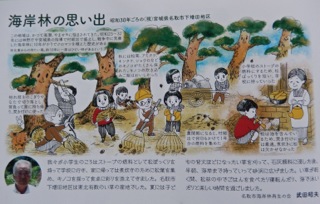
Nature and Science. Where do they dance in harmony? What are examples that encourage a happy marriage between these two forces calling for dynamic involvement and change?

OISCA. A Japanese NGO devoted to planting trees. Worldwide. And also very close. Natori, a town bordering Sendai, blessed with ten years of OISCA support. A project to replace large sections of the once vast coastal pine forest, obliterated by the March 11 tsunami.
OISCA is wise. It uses the expertise of locals for advice and direction. OISCA supports; it does not dominate. Together all involved build a future based on trust, respect, ancient wisdom, modern science, and hope.
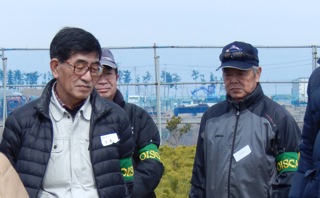
OISCA is smart. It works beyond and around the planting of trees. Total commitment to the whole. Once yearly, average citizens come to help plant pines. Year round OISCA and locals hold meetings, seminars, and educational programs, both in town and in the field. Experts provide clear explanations of where we have been, where we are going.
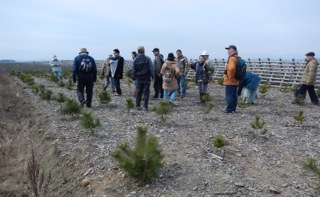

We stumbled our way over soft earth, covered with wood chips, and trenches to catch life-giving water, much needed this year of minimal snow and rain. We learned how crucial caring for the roots is, and how red pines and black have different needs.

In stark contrast were adjacent patches, planted by a profit-oriented company. The trees there looked sad and weak, dwarfs next to their neighbors, although planted at the same time.

OISCA and all those who assist use Science in total accord with the Nature it serves. 100 years from now, 200 (?), 1000 (?) . . . We are planting today so the future, which we personally will never see, will prosper.

Love,
Anne
March 11, 2016
- At July 27, 2016
- By anneblog
- In Annes Letters
- 0
Dear Family and Friends,
March 11, 2016 was a gorgeous day. The air was cold and sharp, the sky was cloudy, but kind. It was a perfect day for turning inward to honor the past. It was a perfect day to look outward to continue the long stretch of becoming.
Downtown Sendai that day was bustling. Life as usual. The coastal areas were alive, too, but in a very different way. This year marked the 5th anniversary of the Great East Japan Earthquake and Tsunami. So, memorial services were plentiful and well attended. I returned to Arahama, where I had explored several weeks before, because of the special event being held there.
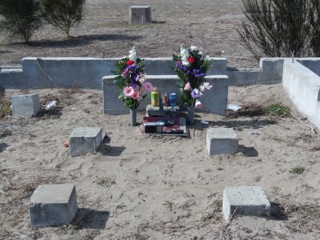
I arrived before the official program began. I wanted to attune to the place, the energy there, and sense how it differed from my recent visit when I was alone. People had already begun to assemble. Some gathered near the landmark elementary school, now ruined and empty. Others clustered at the temporary Buddhist temple. But most headed straight to the statue of Kannon, The Goddess of Mercy, who remained standing despite the powerful force of the tsunami that demolished everything around Her. Behind Her was the new tsunami wall, which many had climbed to bow their deepest respects to the life-giving, life-destroying sea beyond.
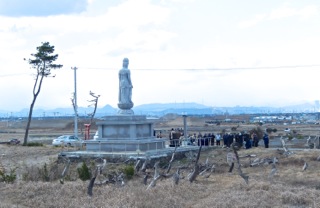
Despite the barren land and fragile foundations of houses, the entire area was filled with the pungent scent of incense and rolling chants, accentuated by bells and gongs, drums and prayers. A steady stream of people in black and carrying flowers continued to pour in. They came locally and from afar, from all over the country, in fact. All came to pay their respects to those lost and those who lost on that tragic, life-altering day.
Shortly before 14:46, the exact time the earthquake struck, official prayers began. “Our beloved ancestors, we are here today to honor you. Thank you for joining us as we remember you and pay our deepest respects for all you did for us. We know that you still care for us, as we do for you. Please do not worry about us. We miss you tremendously, and are deeply appreciative of all your support in this world and beyond. Rest assured that we are working hard to build a future so that your progeny will prosper, and the land and sea will become abundant with life once again. Thank you for your presence today. We honor you. And now please return to your heavenly abode and rest peacefully once again.”
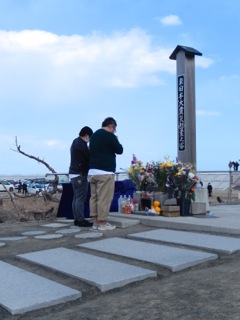
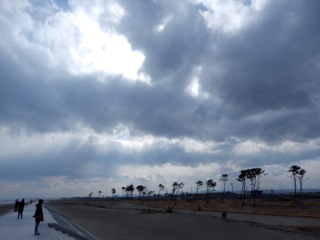
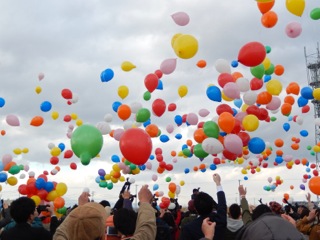
Then, as if on queue, all heads bowed in unison, and a profound silence emerged from the earth itself and from the depths of our souls. Gratitude and promise: the past and the future as one. At the same moment light streamed through the clouds, surely a blessing that blended our small lives and huge efforts with those visiting us from above.
Love,
Anne
Arahama
- At July 27, 2016
- By anneblog
- In Annes Letters
- 0
Arahama is an old section of Sendai. It is on the coast, where farms once butted right up to the sea. “Ara” means “rough”, and “hama” is “shore”. That is a perfectly matched name, where the ocean often shows its most angry face, as it did so ferociously on March 11, 2011.
People in Sendai proper are mostly pulling together their lives. Their daily focus has shifted from survival mode to arranging new homes or getting kids to play fewer computer games and do their homework. But at one extreme edge of Sendai, Arahama, things are very different. Wanting to know how things were faring, I decided to go to Arahama before March 11 to visit the area at my own pace.
Arahama is divided by a highway. On the side toward the mountains, farmhouses are surrounded by greenhouses and fields hungry for planting. Life is thriving, with a sense of continuity and of tradition.
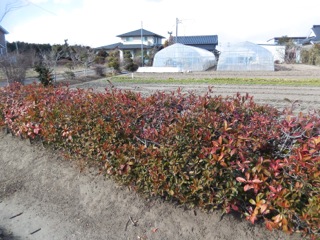

Surprisingly, a demolished temple still claims holy ground, housing itself in a temporary shelter surrounded by ruins and debris. A priest stays there with his fully adorned altar, welcoming parishioners who need to talk or to pray.


Arahama and places along the coast of Tohoku are not the only ones that will hold Japan in their thoughts and prayers on March 11 this year. In far away Los Angeles’ Tokyo Town, for example, a three-day memorial event will also take place. One part of that program’s full agenda will be a documentary film called Kyō/Today/今日, made by a young filmmaker, Austin Auger. It presents the stories of six tsunami survivors. If you wish to see a preview of this very moving film, please go to the website below. Surely you will feel the courage and determination of those building a future out of the lessons and hardships of profound loss, coupled with ongoing community solidarity and love.
Anne
Yuriage Fish Market
- At July 27, 2016
- By anneblog
- In Annes Letters
- 0
November 2015, sent in January 2016
Dear Family and Friends,
Every time I write to you, my focus is on positive developments in the Tohoku area of Japan. Despite more attention-grabbing events elsewhere, it seems important to continue reporting on constructive progress happening here. These changes may be small and quiet, but even so, they can be highly significant, at least to some.
There is a small coastal town just south of Sendai called Natori. One section of it is named Yuriage, perched right on the edge of the sea. So, of course, it was obliterated by the 2011 tsunami. That unwelcomed monster consumed not only the town itself, but even more tragically, well over half its residents.
But now almost five years later, the area has been impressively transformed. It is almost entirely cleared of rubble, and land is being elevated, hopefully to block other tsunami from entering the area. Also very happily, the fabulous Sunday morning market has reopened.

Yuriage’s fish market is very popular, despite its very early hours. People flock there to enjoy seafood fresh from the ocean, and vegetables straight off the nearby farms. In fact, the seafood is so fresh it goes directly from boats to stalls, to customers’ hands to grills, where it is cooked and eaten immediately.

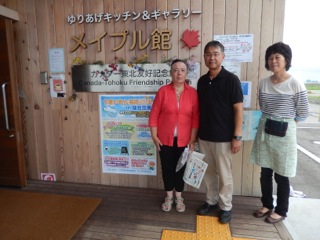
Next to this market there is a wooden building called The Maple House. It was donated by a Canadian project called The Canada-Tohoku Friendship Program. It is as much an educational center as a place to relax. This lovely edifice offers a small shop of Canadian and local goods, an ongoing video of the tsunami, and a pleasant restaurant.
Recently I went there with a Canadian friend. The manager was beside himself that a Canadian was there. “A Canadian!” he shouted with delight. “We are so grateful to your country. It is because of you that we are where we are today. I have been to Canada several times to bow my deepest gratitude. I want to go again to continue letting the Canadian people know the extent of our appreciation. We have our lives back because of you.”
Besides The Maple House, there are other very meaningful memorials nearby. One is a small makeshift museum filled with artwork and stories that children made as a way to come to terms with their losses. A very touching display of clay figures depicts how their town was before the tsunami. On the wall behind it are photos of Yuriage just after the tsunami and now.
“We did this for healing. Many of these children became orphans on March 11. We think that if they go back and construct what they had, they can develop courage to rebuild their own lives now and in the future.”

The other is a small sacred hill, built long before the disaster hit. At the summit is a Shinto shrine. Fishermen have been going there for centuries to pray before and after their journeys at sea. Those left behind also visit there, using it as a lookout, hoping for signs of their returning men.

Besides the shrine, there is a very old, gnarled pine tree, a tori gate, and several origami-covered memorials. Today people come by the busload to pray for the souls of those lost and to bless those who remain.
Yuriage is indeed a special place. Eternity is crowded into its compact area, offering its ongoing story of depth and darkness, hope and joy.
Love,
Anne
Ongoing Repairs
- At July 27, 2016
- By anneblog
- In Annes Letters
- 0
More than four and a half years have passed since the Great East Japan Earthquake and Tsunami. But even now repair work continues. The entire sewer system in Sendai, for example, is being replaced. So one after another streets are closed off as work progresses round the clock. That means that roads are often bumpy and bandaged with temporary patches. But those minor inconveniences and ungainly looks remind us that things are getting better. So, we are happy.

The same can be said of work being done on private homes. New ones are popping up everywhere (sadly most without gardens), while others are undergoing renovation. In fact, the entire area seems to be getting a facelift. And that, too, makes us feel hopeful.

My friend Izumi’s home and property present a more hidden opportunity to gain a sense of mature hope. Izumi’s situation is atypical because of its extreme nature. However, the story is worth telling because of Izumi’s admirable example of patience and persistence, even as the world around her has been a relentless blend of stalemate and collapse.
The steep wall behind Izumi’s home was severely during the 2011 disaster. It was wedged between her house and several others below. So, it was virtually impossible to reach in order to make repairs. Izumi explored one option after another, even going so far as to consider using helicopters. Unfortunately, the expense and complication of this issue were so overwhelming that even Sendai City, normally so generous with assistance after the earthquake, refused to help.

Added to that, one disgruntled neighbor did all he could to block any proposed solution. Japan works on consensus, so everyone must agree before action can be taken. Consequently, for years many things were at a real impasse. That is, everything except the wall. With each rainfall, it disintegrated further, despite the thick blue mat protecting it. And as it gradually retreated, the house’s location became more precarious, threatening to collapse over the edge.
This desperate situation continued, seemingly with no end in sight. But impressively, Izumi never gave up. How could she? Her mother lived in that house, loved it, and refused to move. “My husband and I cut down trees in a forest and built this house over 60 years ago. If I die here, that is fine. But I am not moving,” she would stubbornly say.
Despite the overwhelming odds, Izumi held in her frustrations and continued seeking ways to deal with the unending hurdles. And then, totally unexpectedly, things began to shift. The bank approved her request for a loan. A friend found a reliable and (relatively) affordable company to repair the wall, and another to renovate the house. And amazingly, the uncooperative neighbor backed off and Mama agreed to live temporarily in an apartment while the work was being done. And hopefully soon after the New Year Izumi’s mom should be back in her solidly renovated home. So this, too, is another happy ending to an inconvenience, this time a major one.

Imai Sensei’s work with the homeless has a slightly different slant. But it, too, is a story worth repeating. There has been progress over the years: men getting manual and agricultural jobs, for example, and old apartments being inexpensively leased to them by the city. But basically Imai Sensei’s efforts for the community will never end. Homelessness is rampant in Japan, divorce is on the increase, even among folks over 60, and the poverty and tragedy of single mothers are becoming disturbingly more common. Indeed, there is much hidden, and overt, suffering in this society.

And yet . . . and yet it behooves us to allow room for a flicker of hope. Izumi’s patience and persistence show us that. And so does the work being done by Imai Sensei, and millions of others like him. His and their never-ending paths of service must mean this world is not in a stalemate. Yes, we seem to be teetering on the edge of collapse. But even so, we have to trust that things are creeping forward. And hopefully soon the tide will turn away from today’s destructive forces, allowing a new attitude of rebuilding and repair to take hold, even as many seemingly impossible hurdles and inconveniences continue to block the way.

Love,
Anne
Otsuki Sensei and Peace
- At July 27, 2016
- By anneblog
- In Annes Letters
- 0
Dear Family and Friends,
Otsuki Sensei is a remarkable man.


“It was such a happy time,” Ostuki Sensei says with a nostalgic laugh. “We were free, but also very connected to nature and the responsibilities of living on a farm.”
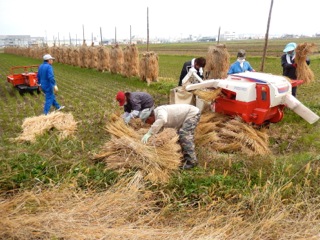
His love of the land led Otsuki Sensei to become a geologist. “I study the past, of course. But my field of interest is the future. How can we look carefully at the patterns of rocks and earth and decipher their profound stories? And how can we then use what we learn to predict what might happen in the future? Geology is not a precise science, but in a country as vulnerable as Japan, a forward perspective is crucial. We have live volcanoes, frequent earthquakes, devastating tsunami, inundating mudslides, and overwhelmingly destructive fires. So, it is important to have at least a small sense of when and where these life-threatening events will occur.”

But Otsuki Sensei goes further than that. “I was born just after WWII. I remember the stories my grandparents and parents told me. I realize that war is more destructive than any natural disaster could ever be. And so, I put all my efforts into working for peace. The issue of changing our constitution to permit the Japanese military to be more actively involved in war is very disturbing to me. So, I knew I had to do something. I joined a group of like-minded people: young and old, intellectuals and manual laborers, salary men and students. We are a large mix of people with one idea: PEACE.
“I went with this group twice to Tokyo to demonstrate. To our great disappointment, the change was pushed through, despite extensive opposition. Even so, we have not stopped our efforts. We are still very passionate about this complex, history-changing issue. You might not see as many of us on the streets in Sendai since the vote, but we are still demonstrating here and in Tokyo. There are other organizations involved, too. Maybe the most famous is SEALDs (Students’ Emergency Action for Liberal Democracy.) In fact, we plan on having mass rallies in Tokyo on the 19th of every month. We chose that date because this very controversial bill was forced through on that day in September. And of course, we are voicing our concerns on Social Media. We are doing our best to make people wake up and to resist the government’s choice of allowing a militaristic path to deal with political issues.
Love,
Anne
Awakening to Subtlety
- At July 27, 2016
- By anneblog
- In Annes Letters
- 0
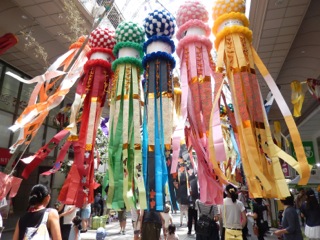
I appreciate Tanabata very much. Even though I shun crowds, I go every year. I slowly wander my way down the decorated arcades, taking photos, watching adorable children and traditionally dressed visitors of all ages. Actually, all of us are doing the same thing. So, it becomes a time of mutual delight.
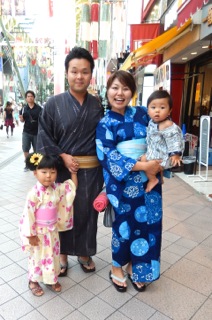
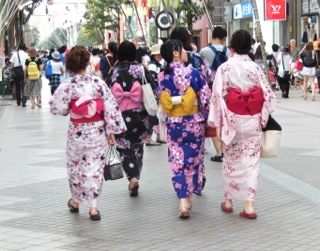
This year, for example, I wandered through the Tanabata streets the day before the festival began. I watched men hoisting huge bamboo poles over the walkways. I could peer closely at not-yet-hanging streamers and read the wishes for peace attached to them.

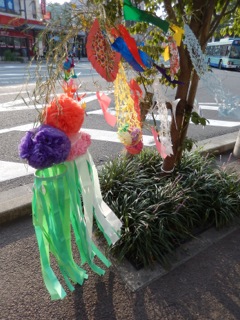
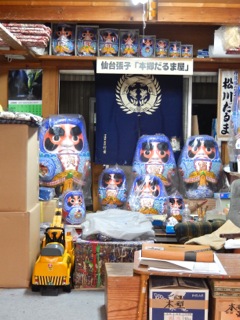
I find this same awakening in other areas as well. For example, given a choice, I take small side streets and enjoy seeing tiny shops that defy the glitzy trend of renewal in post-2011 Sendai. There are still small establishments that specialize in one thing only: rice, tatami mats, Daruma dolls, soy sauce, or after-school candy for kids.

Love,
Anne
Volunteering at Yomawari
- At July 27, 2016
- By anneblog
- In Annes Letters
- 0
Recently I went to volunteer at Imai Sensei’s Yomawari Group. I had not been there for a while, and it was good to be back. The atmosphere there is always so welcoming and warm. This time I went with two friends. They had heard about Imai Sensei’s admirable efforts to serve the homeless, so they wanted to meet him.

“There are fewer people that come here these days,” Imai Sensei explained. “Many of the younger men are going to Fukushima to work at the nuclear plant. The conditions there can be really challenging, but they get a place to stay, food, and a bit of money. Also four of our once-homeless men have received training in agriculture and now work on an organic farm outside Sendai.”
Then he went on to say, “In this hot summer weather and with so few who come to eat (There were 25 that day.), we don’t cook now. Instead we order packaged lunches that are wholesome and filling. And we add some fruit for dessert.”


The members of Yomawari Group are extremely well organized, so things go like clockwork. Within minutes today everything was set up: tables for food and drinks, used clothes and living supplies, which included propane gas for portable stoves, rice, and mosquito coils.

The hungry guests waited politely outside until the dot of 12. Then they flocked in and politely accepted lunches, soup, and drinks. This time, more than usual, the men eagerly poured over used clothing. Some were surprisingly fussy about the condition of their choices. Collars had to be just right, for example, and shirts and trousers had to match. After selecting, some of the men immediately changed from their sweaty, rather grubby outfits to fresh ones, allowing them to face the world more presentably and with greater confidence.

As usual, Imai Sensei informed the men of jobs – currently for cleaning services – and warned them to watch their belongings carefully during the upcoming Tanabata festival. Literally thousands of visitors descend upon Sendai then, and the police strictly keep the streets impressive and orderly. Later in the afternoon there was assistance from a caseworker for those suffering from alcoholic addiction.

Imai Sensei and his business partner Aoki Sensei, plus all the loyal and committed volunteers really care about those they serve. And working with them is always very meaningful and uplifting. I only wish I could do more.

Love,
Anne
Islam and Anas’ Visit
- At July 27, 2016
- By anneblog
- In Annes Letters
- 0
Dear Family and Friends,
As you may remember, last January ISIS beheaded two Japanese. Of course, the news rocked this nation. It also resulted in a very lively discussion about Islam in my adult English class. Even though I knew a bit about that “Religion of the Book”, and did my best to portray it in a positive light, I felt it was unfair of me to try and answer my students’ deep and complex questions, blended with confusion and shock. I realized I needed help.
As an aside, on personal level, I had two questions of my own. What is the appeal of Islam that is causing it be the fastest growing religion in the world? And maybe more importantly, what is Islam’s contribution to the ongoing evolution of the human soul?
Tohoku University, fortunately in Sendai, has many foreign students. I happened to know a Muslim from Algeria, and asked him to come to my class to teach us about his religion. He was not able to come, but his Jordanian friend, Anas, could.
When I contacted Anas, his kind reply was:
I do, fully, understand the purpose behind your reaching out to Muslims; and I do, truly, appreciate your doing so. Consequently, I will be happy to come and talk to your class.
I, of course, was both thrilled and relieved to receive his assistance.
The speech Anas gave was about the basics of Islam. It was clear and well organized.


One key point that emerged was that Islam was more than a religion. It was a way of life. He also emphasized the distinction between religion, politics, economics, and tribal customs. Unfortunately, very often these become confused in people’s thinking.
Anas touched only briefly upon the issue of gender in Islam. He did not mention the remarkable work being done by Musawah, a group striving to empower women in the Islamic world. He did say, however, that according to the Quran, depending on gender, physical and physiological structures and needs were different. That was why the teachings of Islam regarding this issue were built upon justice, not equality. Another way of saying that might be: “Not the same, but fair”.
One example he gave of this concerned inheritance. According to the Quran, when the parents died, all the children were to receive part of the estate. However, male children were to receive a specific amount more than their sisters. The reason being that in Islamic societies men were the main breadwinners, so needed more to support the family.
He added that since Islam had many sects, the understanding of the Quran differed accordingly. When there were conservative men involved, for example, the interpretation differed greatly from when more open-minded men or women were doing the interpreting. He went on to say, “Muslims were all supposed to be moderately-conservative, as well as tolerant. However, some old tribal, cultural, and even linguistic values or notions did affect some Muslim societies’ understanding of Islam and the Quran.”
As for the problems with ISIS, Anas felt that it was a total aberration of his beloved religion. He considered this horror to be an outcome of politics and economic hardships. And he emphasized it was in no way connected to Islam. To quote him exactly, “These people, ‘terrorists’, have no understanding of the religion. They were frustrated by injustice and the situation in their societies {and} thus, found ventilation in violence.”
As for Sunni-Shi’a conflicts, Anas said that until the beginning of the past decade, the two branches of Islam were not discussed. That included in his family, in the street, at school, or through media. However, about ten years ago, major political events started taking place in the Middle East and around the globe. That was when Sunni-Shi’a differences began to be mentioned and emphasized.
Of course, the students and I learned a lot from his thought-provoking lesson, and asked innumerable questions. Later, several of the class members sent me their reactions:
Thank you for the interesting English class last Wednesday and sending me a photo. I am glad that I had opportunity to hear about various issues regarding Islam directly from a young, gentle Muslim. I supposed that most Muslims might have a very rigid idea in his creed. To my surprise, it seems to me that he has a very “flexible idea” about Islam. I wish from the bottom of my heart that every Muslim had the same “flexible idea” on the religion as he had.
* * * * *
Thank you, too, for giving us an opportunity to learn about Muslim.
Anas San’s lesson was great.
It seemed that he prepared carefully and very sincerely.
In fact, he corrected one of my stereotypes.
I mean, I was thinking the same question as he said that he was once asked in Hong Kong; ‘Is he Sunni or Shia sect?’
But he said, ‘I am Muslim.’
It was really impressive for me.
Knowing nothing is dangerous but knowing a little is more scary, because that can lead you to a fixed idea, I think.
* * * * *
His lecture made Islamic culture feel a little closer to me.
His story about Ramadan reminded me of my experience of being on a diet.
He said not drinking water during the day doesn’t make him proud, which was impressive.
But I also realize tin Islam the genders are clearly divided.
Today’s class was from the male perspective.
It would be very interesting having a Muslim woman come to class and tell us of her feelings and experiences as a practicing Muslim.
* * * * *
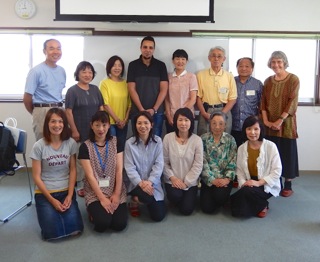
As I write this, it is the holy month of Ramadan, so Muslims all over the world are fasting. Breaking fast is called Iftar. Every Sunday evening a special Iftar is held by Muslims in Sendai. Anyone is welcome. Anas has invited me to go this coming Sunday. Of course, I said yes. I will take my former student Toshi, who is thinking of marrying an Indonesian, but must convert to Islam to do so.
Eventually, Toshi may become a Muslim, but I will not. Even so, we both feel that knowledge can bring respect. And our little efforts toward better understanding something as powerful as Islam may be one small step to help change the world for the better.

I will close this letter in the way that Anas ended a message to me.
Be Always Blessed, My Friends.
Salam,
Anne
Zen San, a Coppersmith
- At July 27, 2016
- By anneblog
- In Annes Letters
- 0
Dear Family and Friends,
Every now and then life allows us the privilege of meeting someone particularly pure. When that happens, things seem to shift ever so subtly. And then the world becomes more promising and hopeful. Recently such a person crossed my path. And since his story is rather unique, I would like to share it with you.
The other day a friend showed me a pamphlet that he had received from a shop owner down the street. It had photos of exquisitely executed copper items: bowls, vases, cups, and pitchers. The work seemed very modern. And yet, there was a distinctly traditional Japanese essence to each piece. I was fascinated, so went to find the workshop. And there, to my surprise, right in the large storefront window, a young man in traditional clothes was hammering away at a copper bowl.
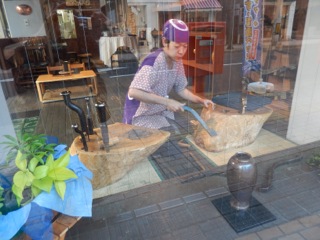
“Excuse me. Would it bother you if I came in,” I queried with a bow.
The gentleman looked up, rather surprised to see a foreigner. When I explained what got me to his shop, which was impeccably clean and orderly, Zen Tanaka San beamed with delight and invited me in. Then he showed me his neatly arranged tools: some wooden and some metal, some heavy and some light.
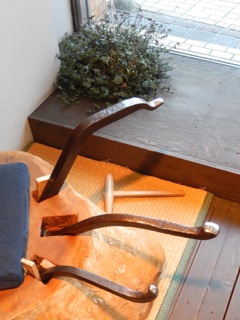

Zen San gave me a brief tour of his shop, showing me one stunning piece after another. He explained that designs were based on traditional motifs, but he would adapt them according to each person’s wishes. In other words, each item was individually designed, and therefore unique.


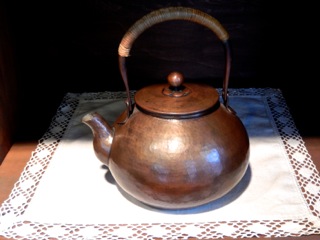


I asked him how the events of 2011 affected his business. That was a time when people could only focus on survival, nothing extra. Zen San told me he stopped working for two years, married, and had twins. The shattering events of March 11 were a wake up call. He had always lived outside the norm, but when the world turned upside down, he realized even more strongly that his life had to be his own. Living it each day fully focused, creating, caring, and loving are all that matter to him now. And he hopes to instill those values into his children, whom he adores.

Love,
Anne


