
Today’s Surprises
- At July 28, 2018
- By admin
- In Annes Letters
 0
0
I had not been to Yomawari’s Soup Run for a while. But today since I was free, I headed down to the park to help out. I got there a few minutes early, so was able to watch the recipients slowly assemble. Some I recognized, but many I did not. And that was the start of many surprises.
As expected, there were the old men who have come for years. They always seem both humble and grateful. And maybe a bit shy to be receiving food and various take-away items, such as fuel for portable stoves, rice, toothbrushes, and recycled clothing.

But this time things were also different. First, there were many more waiting to be fed. Also, they were an array of ages, including several rather young. There were also many women. Usually there are none, or at most one or two. Today one younger woman had been a sex worker, but became ill and had just got out of the hospital. She looked awful and vomited all her food as soon as she had eaten it. It is very rare for this sort of woman to show up at a soup run because a pimp is usually in charge of her.
Perhaps the most surprising, though, was the fashion. Some of the women had very attractive clothing, bold necklaces, and nice shoes. I found that confusing, something I had never seen before and surely had not expected.
Coupled with that was the attitude. Rather than showing a sense of appreciation, as the old timers do, the new ones seemed to expect this handout, even with a touch of entitlement. I found that unusual, especially in this culture, where humility is taught from an early age.
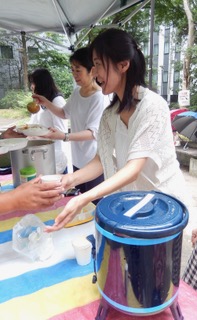
I asked Imai Sensei for an explanation. His response was rather disturbing. “These people are suffering from addictions. Not only alcohol, which has been a problem for years. But now there are strong addictions to gambling and to online shopping. Many of these people actually have a room to live in, some even get social security payments. But what do they do? They gamble and shop, day in and day out, so by the middle or end of the month they have no money for food.
“This problem is getting worse. We help as best as we can, but we are limited. Sendai needs more addiction counselors. These people need more than food and take-home bags, showers and clean clothing. They need someone to guide them through the hard work of overcoming their addictions. Likewise, society really has to take a hard look at where it is going and offer something of meaning to its citizens. But sadly, I think things are going to get worse before they shift and start to improve.”

Love,
Anne
Meeting Shuhei
- At June 17, 2018
- By admin
- In Annes Letters
- 0
As you know, during the tragic 2011 earthquake and tsunami in Japan, I wrote daily letters to family and friends. You were among them. Those postings were made into a book, Letters from the Ground to the Heart: Beauty within Destruction. Since that time, I have continued writing about events that have occurred here in Sendai and the Tohoku area. You have all received those letters.
Since 2011 was so significant for Japan, a friend suggested that the book be translated into Japanese. I agreed. And since she, Kumiko, is a professional translator, she offered to do the job. Again, I happily agreed.
The Japanese version, however, will be more than my letters. Unbeknownst to me, before I came to Japan, two of my relatives also had come to Sendai. One was an uncle who was sent here on a military mission just after World War II. The other was a great-great uncle who came almost 200 years ago. Lucky for me, I have a letter by my Uncle Had about his time in Japan, and a diary of my great-great uncle, written about his experiences here. Both are gems, so Kumiko and I decided they should be part of the Japanese book.
Besides her translation work, Kumiko has a very demanding regular job. So, we are aiming for the tenth anniversary of the quake for this version to appear. Likewise, Kumiko is an unusual translator. She does not work with words only, but also with feelings and surrounding circumstances. It is as if she enters the heart of the writer and tries to recreate the soul of a situation. This takes tremendous talent and, of course, a lot of time.
Kumiko has a young friend, Shuhei, who has muscular dystrophy. He is brilliant, but physically challenged. He has been frustrated by not being able to work, but Kumiko came up with the idea of having Shuhei translate Uncle Had’s 14-page letter. And since then, the three of us have formed a team: The Trio and The Letters. We are also known as ASK: from Anne, Shuhei, and Kumiko. That is a perfect acronym since we three constantly ask each other questions to learn more about Uncle Had and the era when he was here.

Ever since this three-way project began, Shuhei and I have been writing almost daily. Even so, we had never met. Until today, that is. This afternoon the ASK Team got together and spent a wonderful time simply as friends. Now our work will surely be much more complete because it covers many dimensions, all rising directly from the heart.
Love,
Anne
OISCA: Philosophy & People
- At May 19, 2018
- By admin
- In Annes Letters
- 0
This morning at 4 a.m. it was pouring in torrents. By 6 o’clock it had completely stopped. The gods were being kind since today was OISCA’s annual “Tree Planting Festival”. Along the coast near Sendai, in Natori City, where the 2011 tsunami hit the hardest, OISCA has been working with locals to rebuild the 500-year-old forest devastated in that disaster.

OISCA guides; it does not control. Locals are in charge; OISCA assists. OISCA is here temporarily; locals will stay for generations. So, OISCA is more a teaching-learning project than a regular NGO. That is a philosophy I strongly espouse, so am happy, even proud, to lend my small support to this great organization.
I also love the people. They range in age from grandparents to new borns. One lovely gentleman, for example, has trouble walking, but volunteers with OISCA regularly. Today he higher minded his bad back in order to mentor an eager youngster on how to use a hoe and to plant properly. Surely, the seeds sown today were far more than black pine.

There were many high school students, too. I was lucky to pair up with a young girl, shy but lovely. We dug holes, planted, stomped the earth around our newly installed pine, gave a tug to be sure the tree was in securely, and moved on to the next. And the next. And the next . . .
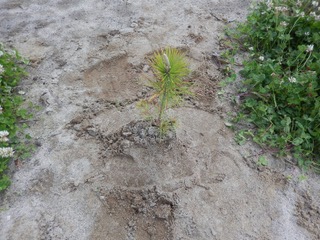
There were grandmas and grandpas, too, knowledgeable, wise, and hard working. They expertly sped through their work, leaving perfect rows of baby trees behind. And then they shifted to give a helping hand where needed.
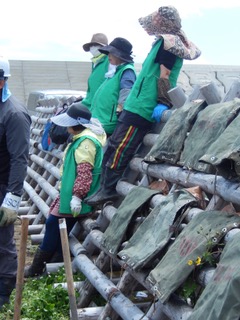
Probably everyone’s favorites, though, were the families with teeny kids. Two couples in particular were especially honored. One because they had met a few years ago — at an “OISCA Tree Planting Festival” — and today arrived with the latest member of the family.


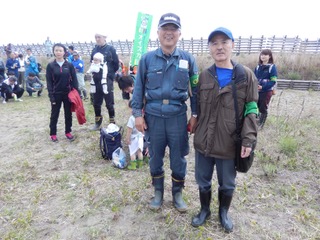
And of course, there were the officials. Yoshida San, the man I met at the OISCA photo show several years ago and who turned me on to the magic and wonder of this organization. He is now the head of this rebuilding project in Natori.


Love,
Anne
“Ma”
- At March 29, 2018
- By admin
- In Annes Letters
- 0
This year I did not write on March 11, seven years after the devastating trauma that changed our lives forever. It was not out of forgetfulness. On that day we honored the deceased and those still struggling. We had ceremonies and paid our respects. We held rituals and prayer services all day and well into the night.
Personally, I entered a time of quiet reflection, not wishing to press Tohoku’s situation upon unconcerned others. Indeed, as one friend said, “So many places in the world are suffering more than we are now. We must put our attention where help is most needed. We remember our past, of course, and are now building for our future. Yet it behooves us to stay open to the tragic events in the lives of people worldwide.”


Love,
Anne
Generosity in the Time of Greed
- At February 25, 2018
- By admin
- In Annes Letters
- 0
Dear Family and Friends,
The other day a Japanese professor asked me to decipher a handwritten diary that he needed for a research project. The author was, as this professor informed me, “William Woodville Rockhill, an American diplomat and a famous Tibetologist, who visited Outer Mongolia in December, 1913.”
I was intrigued by the task and wanted to give it a try. However, the writing was barely legible in places, worn and fragmented in others, yet fluid and elegant in way reminiscent of that bygone era.

But I have a friend, an American living in the USA, who had majored in history and is now retired. He would be perfect, I thought. And indeed, he was, in more ways than one.
Alan completed the task in record time, and said he enjoyed the challenge. When it came time for reimbursement, he simply said, “I am blessed with a good pension. I live a full and happy life. So, please give the money to the NGO of your choice.”
The Japanese professor was rather taken aback by this unexpected gesture of generosity. So, he allowed me to make this important decision. I suggested one of my favorite, hands-on groups – Sendai’s Yomawari.
Yesterday, despite the cold, with snow and piercing winds, Yomawari volunteers, as usual, were in a local park handing out delicious, nourishing food, warm clothes, and “happy bags” filled with items useful for survival on the street.
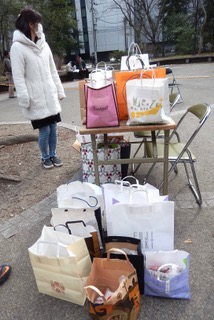
As we volunteers were working to serve the homeless guests, one organizer came to me and said, “Thank you so much for the extremely generous donation. Your friend was so very thoughtful and kind. His gift is rare and deeply appreciated. Please thank him for making such a difference, even briefly, in so many needy people’s lives.”
Love,
Anne
Helping Those in Need
- At January 12, 2018
- By admin
- In Annes Letters
- 0
My apartment lies next to a mental hospital. This neighbor is small and family-run institution, which has an excellent reputation for its attentive care and concern. There are inpatients, of course, but there are also those who come regularly for check-ups, sometimes on a daily basis. One such is a woman with rather wild attire. I often see her heading to the hospital dressed in amazing outfits, such as a fluffy blouse with huge vivid chartreuse and orange flowers, along with skin-tight red and black plaid trousers, blue and pink striped stockings, yellow shoes and a wide-brimmed purple hat. She is extremely nervous and talks incessantly to herself, as she scurries along, inevitably puffing away on a cigarette. I have grown rather fond of her, even though we have never spoken. I like her sincerity, her total honesty in being precisely who she is with no pretenses. I also feel she gives a needed and rather exotic flavor to the neighborhood.

One of my free-time delights is wandering the narrow, winding streets surrounding my home. One day as I exploring a small alleyway, I saw two figures huddled on a fire escape. One of them was a rather chubby man in filthy sweat pants and a torn shirt. He was talking non-stop, even as he blubbered loudly, occasionally wiping away tears on his sleeve.
And who was next to him? Who was sitting very close, listening intently to every word the poor man was saying? Who was rubbing his back, reassuring him, saying, “You’ll be all right. Everything’ll work out. Just you wait and see. I know it. I just know it. Everything’ll be just fine.” The total attention and loving care that the little extravagant dresser was pouring out to that distraught man were palpable. It touched me to the core. Even though she obviously had tremendous insecurities of her own, this precious lady was able to open her heart wide and give fully to someone with even greater needs.

Wherever and whenever, Love hungers to be felt, directed, and accepted. It only requires those who are willing to do so.
Love,
Anne
Japanese Thanksgiving
- At December 12, 2017
- By admin
- In Annes Letters
- 0
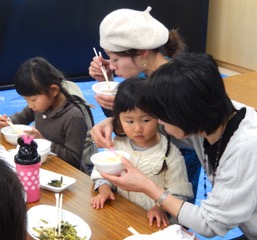
Even though it is already December, here in Japan we are still honoring this year’s harvest. In fact, last weekend a nearby community center held its annual Thanksgiving feast. This event is always special because of the ingredients of the dishes. The Wakabayashi-ku Center has a community garden, which grows such delights as daikon, carrots, onions, potatoes, cabbage . . . The list goes on and on. And of course, since it is a community project, when autumn comes, it is time to share.

Pots are huge and bulging with the freshest, most lovingly grown produce. That allows for different varieties of stews, enhanced with chicken, beef, miso, even kimchi.

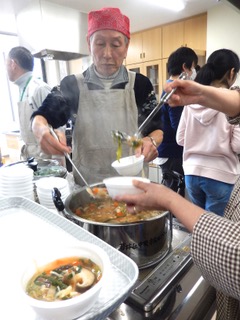
Besides indulging in culinary pleasures, we are given a lecture by one of the younger members. We learn how this project began and where it hopes to go. Many of the oldsters attending were probably farmers, but the younger ones have to learn through study, local gardens, and the wisdom their elders can give.

This Thanksgiving experience is always filled with genuine warmth and welcome.
Love,
You are, therefore I am
- At November 05, 2017
- By admin
- In Annes Letters
- 0
Gradually the concept of a separate self is emerging in Japan. But basically, the core mindset is, “You are, therefore I am.” This is a collective culture, so identities easily bleed into each other. “I am me, of course – but only because of my family, my teachers, my boss, my colleagues, my friends, and my community.” In other words, “I am a part of all that I have met.”

“My daughter works much too hard. She never gets enough sleep. She and her husband come here for dinner every night at 10 pm and fall asleep at the table. No wonder she became so sick yesterday. I’m worried about her with her terrible life style. That’s why I’m cooking her husband’s favorite dish for tonight. I’m sure that will make her feel better.”

The little lady who lives near me is very poor and lives in what could be called, as a compliment, a shack. When I passed her place last summer, I commented on the lovely vegetables crowded into her teeny garden. “Here, my dear,” she replied, “let me give you some cucumbers and eggplants. We can’t let someone go without giving them our best, now can we?” I thanked her for her generosity, but politely refused her kind offering, well aware she needed it more than I.
Another older woman lives in the same apartment complex that I do. She comes over three or four times a week with something still warm from her stove. “I grew up in a family of eight kids. We always shared. You know, food, clothes, school books, everything. Now I live alone, but I can’t stop cooking for a huge family. And besides, I like connecting to people, and I guess food is my way to do that. Giving like this makes me feel complete.”

Much to my annoyance, I lost my umbrella the other day. Since it was a rainy week, I had to buy another one. Quite a while later as I passed my local Shinto Shrine, what was there? My umbrella, exactly where I had inadvertently left it. “Of course, it was still there!” my friend said, surprised at my amazement. “Whoever saw your umbrella knew that if they took it, it would have inconvenienced you. So, they left it.” And sure enough, all over this city you can find lost items placed so they can be easily spotted. Even money is often left right where it happened to fall. “And besides, it was next to a Shinto Shrine,” my friend added. “No one would dare take anything from there.”

One of my favorite students graduated recently, plus landed a good job. “Congratulations, Toshi. What is the first thing you want to do in your new life?” I asked with interest. “I am where I am now because of my parents. So, with my first pay check I want to treat them to a gorgeous spa weekend. I want to let them know how grateful I am, not only for my education, but for raising me and taking care of me all my life.”
The other day in my advanced discussion seminar the students were discussing the difference between “the right to be happy” and “the right to pursue happiness”. “To be happy is passive; to pursue happiness is active,” came the obvious reply.
“Yes, but can you give me an example?” I pressed.
“I am happy when I work hard and get what I want. You know, like when I study diligently and get a good mark. Then I feel very satisfied. That is for me, so it is passive.”

I was fascinated by her interpretation, so asked her to continue.
“Pursuing happiness is about other people. When I do all I can so another person can feel happy, then I am pursuing happiness. Like when I listen to my friend’s problems and give her some advice. If that helps her, then I pursued happiness in the right way.”

“You are, therefore I am.”

How appreciative am I each day for everyone and everything that continuously helps me become who I am? How much to I offer others the opportunity for the happiness that we all deserve?
Love,
Anne
The Japanese Bath
- At October 14, 2017
- By admin
- In Annes Letters
- 0
With that in mind, maybe it is not too farfetched, even as daily news continually shreds our hearts and challenges the limits of what is credible, that I wish to share some reflections on Japanese reverence for the bath. Actually, probably the time is perfect. Who does not need inner and outer realignment and purifying in these very troubled times?
Since time out of mind, and stretching equally far into the future, bathing for Japanese reaches the level of the sacred. Both blessed and cursed by a fiery arc of volcanic jewels, Japan is a paradise of abundant water, often directed into hot springs, foot baths, health resorts, and spas. Young and old, fat and thin, strong and infirm, pretty and plain. All dualistic perceptions of outer identity are shed as the daily ritual of cleansing unfolds.
“Our bodies are natural. Being with others who feel the same is reassuring and community affirming. How ridiculous it was in California where they wanted us to wear bathing suits in the bath. How unnatural is that! We Japanese didn’t follow those silly rules. How could we?” remarked a student coming back from her stint in the USA.
“The bath is a return to our original purity,” said an older friend. “It cleanses not only the body, but more importantly the mind and spirit. You mask the deep purpose of bathing if you cover yourself. Literally by having clothing or tattoos. Symbolically by closing yourself in defensiveness or shame.”
The oldsters’ community center where I often go for deep baths is a wonderful blossoming of folks at one with their bodies. The very old and not so, the extremely wrinkled, wobbly, sagging, and less so, we are all there. Some stay all day. “I need the friendship,” they say. “I appreciate the flux of people.” And “I feel part of society when I am here.”
We chat, we scrub, we soak. But more than anything we appreciate. The place, the people, the sense of belonging, the mutual concern.

“Of course, we come to purify our whole being, but in reality, aren’t we already pure? These days most people don’t know that, so don’t act that way. But we are pure. It just takes a lifetime to recognize it. In fact, most of us oldsters realize that the greatest task of our life has been to remember what we have forgotten.
Love in purity,
Anne
Brazil & Seeing Differently
- At September 17, 2017
- By admin
- In Annes Letters
- 0
Dear Family and Friends,
Last week I was in Brazil. I had not been in a Latin culture literally for decades. It was a welcome return, thanks to the effervescent expansiveness of Brazilian warmth and their embrace of the immediate, of life itself. Coming from the tidy restraints of Japan, I found myself literally staring at the voluptuous physicality on proud display everywhere.
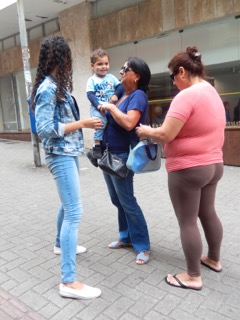



Sadly, upon my return I was greeted by news of North Korea’s latest flaunting of power, its assertive drive to display even more threatening capacities of self-protection / self-destruction. That immediately evoked the necessity of practicing what the Brazilian conference was all about: seeing differently. But can we stop wars by compassionately putting ourselves, as fully as we are able, in the place of those who most oppose us or whom we most resist?
“Seeing Differently” Yes. We must if we wish to survive. But how does that skill eventually become an integral part of us, so innate we use it as our primary tool for relating to others? How can that ability actually change, even save, the world?
How much do our beliefs influence the world? And if they do, how can we truly live what we say we believe?
Love,
Anne
Despair & Service
- At July 22, 2017
- By admin
- In Annes Letters
- 0
One of the greatest challenges I find is to be fully immersed in life and at the same time maintain a positive outlook. I listen to an array of news every morning, and each site resonates with despair beyond measure.
One American friend sent a particularly poignant message, explaining her point of view. “I give dollar bills to homeless people who sit at stop lights at freeway exits. It provides a momentary connection when I can acknowledge their humanity and the tragedy and injustice of their situation but I understand completely that I am not helping them . . .
“There are so many grassroots organizations, everywhere you look, it’s fragmented, disorganized, and there are duplicative efforts covering the same ground over and over.
“My job gets harder and more demanding — patients are needier as the social safety net frays and breaks, AND corporatization is gobbling up the health care industry as every day we get “one more thing” that we are required to do along with the disingenuous and hypocritical exhortation to practice “work-life balance” and “self care” (new buzz phrases that make my skin crawl.)
“I don’t have hope.”
Today I finally had time to volunteer with Imai Sensei’s Yomawari group. It was good to be back with those gentle souls, both the regular volunteers and the homeless. This time there was a rather large group of high school students with their teacher, gaining firsthand experience in helping those in need.
After lunch had been served


“You have seen firsthand that these are good folks. They have just had a hard time. When you are young, you think of life as a progression that moves forward, one step up after another. But sometimes misfortune happens and things change. Or you reach a certain age and then you no longer climb higher on the social ladder. In fact, you start going down. These people used to have good jobs. But one got sick and was fired. Another was laid off because the factory where he worked closed down. Another could never get a foothold after he lost everything in the 2011 disaster.
“It is not these people who are at fault. It is the system. It works against them. Changing the political and economic systems is a huge task, too large for any one of us. But we do what we can do. We address what is immediately before us. We clothe and feed the homeless. We get them medical attention, housing when we can, jobs if possible. But maybe the greatest gift we can give them is a sense of dignity, of being recognized as human beings worthy of our respect.
“Don’t forget what you learned today. Carry it in your hearts always. Keep your mind large. And always be on the lookout for how you can be of service to others.”
Love,
Anne
Because We Help Each Other
- At June 02, 2017
- By admin
- In Annes Letters
- 0
There are certain things I love about the friendly neighborhood where I live. First, I suppose is the city-sponsored senior center with its multitude of opportunities for oldsters. There are exercise and dance classes, a small kitchen and socializing lounge, shogi boards and a library. But best of all for me is the large spa-bath that welcomes all city residents over 65. I go there several times a week and enjoy being with older women of all shapes, sizes, and physical conditions.


To balance that, right down the street from my home is a marvelous city-offered play center for kids. It has a long building full of puzzles and wooden toys, and a stupendously large yard of trees and mud and sand. The children love it. Usually Japanese are excessively fastidious about cleanliness, but here it is permissible – and expected – to dig holes and build forts, construct sand castles or huge jumping mounds. There are slides and swings, flip poles and places for skipping rope or playing tag. No one has a cell phone or wears earplugs. It all about being alive and connected – to the earth, to each other, to creativity, and to joy.

Right next to my apartment is a small family-run mental hospital. It is renown for its kindness to patients and support for family members. Sometimes nurses take a line of patients out for a morning walk. We local residents step aside graciously, making way for this delightful blend of human possibility.

I love the young ones who live close by. They play ball in the parking lot, ride bikes in circles or back and forth, or scurry off to after school activities.

And upstairs is 2-year old Kazuki. He is loud and naughty, confident and radiant with life. I got to hold him when he came home for the first time.


Recently I met a man who had volunteered with an NPO in Myanmar. He worked with the poorest of the poor. And yet, when the March 2011 earthquake devastated Northeast Japan, those humble souls gathered all they could spare and offered it to him, saying, “Your people need this. Please send it to them.” The Japanese man was so touched, so humbled, he cried. And does so even now in the telling, over six years later.
Then he added, “How can anyone talk about ‘my country first’? We survive because we love, because we connect, because we appreciate, and because we help each other.”

Love,
Anne
Parallel Worlds
- At May 29, 2017
- By admin
- In Annes Letters
- 0
Parallel worlds.
The way life operates in parallels always fascinates me. One big simultaneous happening of life and death, joy and sorrow, growth and decline. Metgala in New York, famine in Yemen. All at the same time.
Like so many, I acutely watch and wonder the news these days. Super powers vying for control, some subtly and long term, others ostentatiously and immediate. Xi here, Putin there, Trump all over the place. I see people suffer, others rejoice. Dance and horror going hand-in-hand.
Sometimes in order to survive it seems it is essential to simply surrender to transparency and to beauty.


In the long run, won’t millions of small endeavors like these hold in check the monstrous forces of insanity obsessing the world today? We must hope.
Parallel worlds are becoming so intertwined they become hardly distinguishable. Yet, without horrors, how could we ever expect to approach the depth of Light?
Love,
Anne
Angels’ Voices
- At July 24, 2016
- By admin
- In Annes Letters
- 0
Minami San Riku Cho is a village adjacent to Kesen-numa. Both are in Miyagi Prefecture, but far north of Sendai. Like every other place along the coast, Minami San Riku Cho, has many stories about its uneasy relationship with the tsunami of 03/11. Of course, the port was totally damaged, houses were smashed to oblivion, and thousands of people were displaced or drowned. Yet, despite the overwhelming devastation and ongoing challenges of rebuilding, there are some very beautiful touches of hope and of humanity. Several of them lie in the courage that can come from honoring heroes. Others are found in deep respect for the people working against all odds to urge life forward.
Matsumura Naoto San: Standing Up for the Animals Left Behind
- At March 04, 2012
- By admin
- In Annes Letters
- 0

Naoto Matsumura is a well-known name among animal advocates worldwide. He is the brave soul who defied Japanese government orders to leave his hometown, Tomioka, after the Fukushima Nuclear Power Plant explosion. He stayed on and now cares for the animals left behind.
Recently a friend of mine, Nanci Caron, started a fundraiser to support Matsumura San and his cause. Although she was not a member of any particular animal advocacy group, she asked her friends, family members, and colleagues for “coffee money”. Many gladly gave. In fact, some gave much more. Soon, individuals from all over the globe became aware of the Chip In Fund, and also sent contributions.
Read More»Ishinomaki: 11 Months After the Tsunami
- At March 01, 2012
- By admin
- In Annes Letters
- 0

One of the most unsettling and surprising things in eastern Tohoku is the unevenness of the clean up work. A once damaged area may be pretty much bare by now. But even so, there might be an apartment building still standing with people living on the top floors. The rest of the structure might be broken and smashed up, but the second or third stories might have laundry hanging out on the veranda. Or a bicycle might be leaning against a wobbly pole that more or less held up the entire building.
I went to Ishinomaki last September and was shocked by the extent of the destruction in the area near the port. The hospital was in complete shambles and next to it a pharmacy tilted knee deep in water. There were frames of houses and piles of debris everywhere. And along one whole side of this expansive, tragic mess was a wall of bent and crunched vehicles. There were cranes and backhoes working constantly to gather rubbish, as trucks plied back and forth removing what had been collected.
Read More»Arahama: 11 Months After the Tsunami
- At February 24, 2012
- By admin
- In Annes Letters
- 0

Mid-February 2012
Dear Family and Friends,
Recently a friend and I went north of Sendai to Kesennuma to learn firsthand how things were almost one year after the Great East Japan Earthquake and Tsunami. This week different friends and I ventured closer to home to hear stories of people who used to have homes and work near the sea. We went to Arahama, one section of widely spread out Sendai City. We talked with four courageous souls. Each person had a story. Each tale was unique. But the underlying theme was the same: “We lost everything. The future is uncertain. We can only do what we can today.”
Read More»Kesennuma: 11 Months After the Tsunami
- At February 24, 2012
- By admin
- In Annes Letters
- 0
February 11, 2012
Dear Family and Friends,
It has been a long time since I wrote to you. For me personally life has resumed a degree of normalcy. I go to work, I shop for food, I write, and I try in my own ways to be involved in the relief efforts going on here. Those activities are time and energy consuming, so my letters to all of you have become far less frequent.
When I have time I go out to areas still struggling, more so even that Sendai, to get their feet back on the ground. We have come very far, but we still have much to do. In fact, amazingly just the other day a cluster of bodies from the tsunami were found and identified. So, yes, our work is far from over.
Read More»

