
Shinto Festival
- At October 05, 2022
- By anneblog
- In Uncategorized
 0
0
Dear Family and Friends,
A friend told me about a Shinto festival at Sendai’s Osaki-Hachiman-Jingu Shrine today. I had not been to one of their events in a long time, so decided to go. My friend’s son would be there helping. That, of course, added to my eagerness to attend.
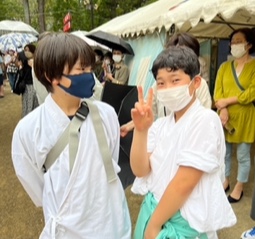
As soon as my friend’s son could crawl and make his wishes known, he demanded that his mom take him to the Shrine so he could spend time with the priests. They loved him, of course, and let him crawl around, exploring as he wished. He has been going there ever since, and now at age eleven is happy to serve when and now he can.
I was not sure what to expect today. Osaki-Hachiman-Jingu has a variety of festivals throughout the year. For example, there a special day to honor and protect firemen. And another that entails competitions on horseback. Riders gallop at full speed along a short, narrow pathway, shooting arrows at targets set along the course. Onlookers are alarmingly nearby. And of course, there is Dontosai, held in the dead of winter. For that, male participants wear only loincloths (woman a bit more), and walk through the city ringing bells as they head to the Shrine. There New Year decorations are burned in huge bonfires.
So, what should I expect today?
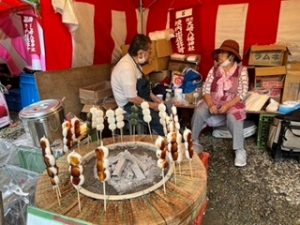
Several blocks away from Osaki-Hachiman-Jingu, I could already hear the continuous whining drone of flutes and the slow, steady beat of drums. I wandered past festival food stalls
In the first one I watched, the dancers were not professional. Rather they were ordinary men connected to the Shrine.


I stayed for two dances and then slowly wandered around the grounds. Several small side Shrines have recently been constructed.


If I were younger, I probably would have stayed to the very end of the dances. But I knew I had to get home before becoming too tired. And I had an hour to walk home. The shrill drone of the flutes, and even throbbing of the drums followed me until I could no longer hear them. Of course, I knew the dances were continuing without me.
Although leaving before the end was something new for me, I rather liked it. I found it symbolic of my aging. And an important reality that I am working to come to terms with, and to accept with grace.
Leaving while the performances were continuing also allowed my day to come full cycle. It began it with Takemitsu Toru’s piece called “from me flows what you call time”. That is surely a prayer set to music and very much related to the eternal unfolding of life.
https://www.youtube.com/watch?v=kWipy3Q6gAI
Love,
Anne
New Life
- At April 16, 2017
- By anneblog
- In Annes Letters
- 0
Last year I focused on the flowers themselves. Their suggestion of other dimensions, of ethereal realities goes far beyond words, to the realm of pure feeling. This year, however, my eye moved more to the people enjoying a day together, welcoming the joys of this hopeful season.

Their delight was in pure contrast to international news, which has absorbed much of my attention in recent months. There are so many worries and questions today. How can anyone applaud an escalation of war as a way to “mean business” and to solve very complex problems? How can people believe the intricately woven stories that divert us from the truth of human dignity, especially of those suffering the most?
The United Airline disaster is yet another example of “might as right”, but this time, thankfully, gone terribly wrong. Can we believe the apologies of CEO Oscar Munoz? Are they genuinely sincere, and not motivate by economic concerns alone?
It seems to me that if Mr. Munoz really wanted to express a change of attitude and values, he would do more than apologize and reimburse passengers the cost of that infamous flight. Has it occurred to him to use a percentage of his enormous salary (14 million dollars in 2016) and all of his bonus money over the years (He may receive yet another $500,000 soon) on an ongoing basis to contribute to organizations that work with victims of police brutality, domestic violence, and child abuse? Has he thought of including United Airlines, Inc. as part of that contribution to the betterment of society?
As I watched ordinary people today together celebrating the return of new life, I realized how truly beautiful our humanity is. And hopefully, the disturbing descent of our values to the lowest common denominator will find reason to change direction, moving us upward to embrace something both new and as old as the universe itself. Spring, the promise of new life for everyone, not just those at the top.

Love,
Anne
Moving Forward, March 11, 2017
- At March 11, 2017
- By anneblog
- In Annes Letters
- 0
The world has moved on from March 11, 2011: the era of The Great East Japan Earthquake and Tsunami. In fact, that time is a distant memory as the world plunges deeper and deeper into wars, chaos, uncertainties, and distrust. And sadly, each day the news is increasingly filled with more and deeper heart-stopping events.
So have we really moved forward?
What about other dimensions of human expression?
How has the world progressed on the level of the heart?
Compassion
Non-Violent Communication
Tolerance
Humility
Forgiveness
Can we honestly say we are making efforts to mature these traits in today’s complicated and confused world?
Surely in many small ways we try.
Carefully, attentively, profoundly.
Today March 11, we blessed our memories and our lives with deep reflection.

Michelle & JoJo, Photo by Ali Asaei
Love,
Anne
Moving Forward, March 11, 2017
- At March 11, 2017
- By anneblog
- In Annes Letters
- 0
Dear Family and Friends,
The world has moved on from March 11, 2011: the era of The Great East Japan Earthquake and Tsunami. In fact, that time is a distant memory as the world plunges deeper and deeper into wars, chaos, uncertainties, and distrust. And sadly, each day the news is increasingly filled with more and deeper heart-stopping events.
So have we really moved forward?
What about other dimensions of human expression?
How has the world progressed on the level of the heart?
Compassion
Non-Violent Communication
Tolerance
Humility
Forgiveness
Can we honestly say we are making efforts to mature these traits in today’s complicated and confused world?
Surely in many small ways we try.
Carefully, attentively, profoundly.
Today March 11, we blessed our memories and our lives with deep reflection.

Michelle & JoJo, Photo by Ali Asaei
Love,
Anne
Sternness & Love
- At February 06, 2017
- By anneblog
- In Annes Letters
- 0

Imai Sensei and Aoki Sensei do so much more than feed the homeless. They give them showers and wash their clothes. They help find jobs and inexpensive apartments. They schedule sessions with lawyers for legal advice – about their individual rights and how best to adhere to city laws.


Yomawari, Imai Sensei and Aoki Sensei’s group, have rules, but enforce them lovingly. They refuse any form of drunkenness. The other day one man arrived reeling from alcohol, stinking from not bathing, clothes torn, and socks so damaged that a web of filthy cracks and splinters peeked through the heels. This guest swayed in, shouting jokes, causing a huge uproar. Volunteers smiled and laughed politely at his antics, but Imai Sensei was not amused. He told the noisy, smelly man to leave immediately. Sternly, yes. But also lovingly.
“Here. Take this food. Take these clothes. Come back on Monday when you can get a bath and your clothes washed. But don’t ever come back drunk. Now good-bye.”
A ban, yes. But also fairness and an open door.
I gaze at an apartment near this park, and wish it were home.
Imai Sensei always says, “The homeless are human beings like you and me. The only difference is they have fallen on very bad luck. We must focus on their humanity and give opportunities for their very best to shine through.”
Love,
Anne
I think we can do
- At January 25, 2017
- By anneblog
- In Annes Letters
- 0
Living overseas as an American these days is extremely interesting. It is also unsettling, confusing, and challenging. Many friends ask me what is going on it my country. They want reassurance and hope. I am never quite sure what to say. But I talk about the resistance to Trump, happily gaining momentum daily. I try to reassure them that America knows the importance of a good relationship with Japan. Even so, people are very uneasy. Yet being thoughtfully Japanese, they think of my feelings, too. And so, they give me reassurance — mostly because they themselves are seeking it.
And after Trump’s election, a friend wrote to me.
I wish USA would be greater than ever.
And the Great USA would help other Countries like Mexico or Japan.
I think “GREAT” means SOFT, KIND, THOGHTFUL, CALM, and WARM ! ! !
It does not mean “A LOT OF MONY”, I am sure.
“Mr. Trump wa, GREAT no imi wa hakkiri saseteimasen.”
(Mr. Trump, the meaning of GREAT is not to decisively cut and pierce.)
So, do not worry!
Mr. Trump could change America better than ever.
I hope so.
In a later e-mail she said:
But half of the number in USA chose “America first”.
I think many people would find out soon that “Together” would be better than “America first”.
I wish he would be good person . . .
Let’s try we can do.

Even as we resist, let’s try.
I think we can do.
Anne
Dontosai
- At January 14, 2017
- By anneblog
- In Annes Letters
- 0
Dear Family and Friends,
On that sacred day people gather their decorations and flock to the nearest Shinto shrine. There they toss their offerings into bonfires that roar and hiss as the flames are fed into full abundance.

What makes this festival unique is not so much the bonfires, however, as the people. Participants join colleagues, dressed in thin cotton outfits and straw sandals. They walk together through the city ringing bells and shivering their way to the nearest shrine. They carry lanterns and hold paper in their mouths to control their chattering teeth and to give them a focus beyond the piercing cold. Once at the shrine area, they circle the bonfires, rejoicing in the warmth, as other worshipers throw their decorations into the flames.


Regular worshippers, fully dressed for winter’s bitterness, also head to the altar to pray. They, too, ring bells, bow, ask for blessings.
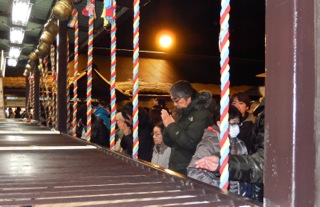

Japanese say they are not religious, and maybe they are not. But they all recognize the power of superstitions and live by them. People of all ages go to shrines on Dontosai. They pray, they eat, they buy expensive decorations and Daruma dolls, immediately throwing them into the fire.

God bless the world as we, Japanese or not, strive for purity and humility, as we seek forgiveness and start this year with endless courage to endure.
Love,
Anne
A Soothing Cup of Tea
- At December 18, 2016
- By anneblog
- In Annes Letters
- 0
Despite the upcoming holidays, the world is bleeding deeply and tragically. A profound sense of foreboding is seeping in everywhere. It would be easy to succumb to the uncertainty of these times, even as they bring values into acute focus.

I could be overwhelmed. But one reassuring thought has emerged in these past tumultuous weeks. “You are not in this alone. Small groups can birth a flexible strength to keep freedom of thought and expression alive. Don’t give up. The work is just beginning.”
I try to relax.
Kon-Sei-En Tea Shop (今清園) is indeed harmonious and soothing. It has tatami floors, huge earthen pots, and well loved wooden tea boxes. “We don’t use these anymore,” the owner explains. “Tea is well packaged now, so these boxes are no longer necessary. But they are beautiful, aren’t they? They are like old friends, so we keep them.”
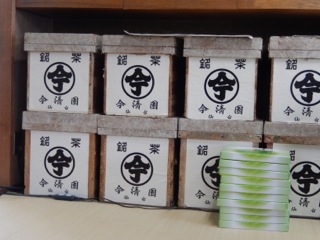

Yayoe Konno and her sister-in-law, Noriko Konno, were both born in Shizuoka, the tea growing area of Japan. They came to Sendai as young brides and now are the only ones left honoring the shop’s old ways.
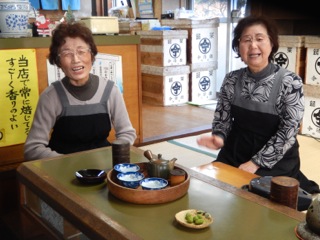
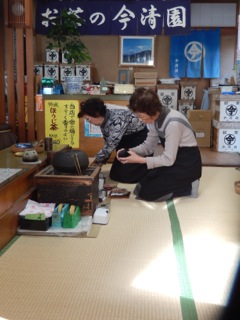
It is indeed a ceremony. Or maybe better a ritual. An ancient and sacred one. I savor the vivid green bitterness, and my soul is indeed soothed. Tea’s continuity through war and peace, through poverty and riches, through hard times and prosperity holds a profound reassurance. We are making dangerously ignorant choices at the moment. But as we “little people’ join together and work relentlessly for freedom of thought and expression, there is surely hope for a better tomorrow.

Love,
Anne
Sharing Communities
- At November 04, 2016
- By anneblog
- In Annes Letters
- 0
Recently I had the pleasure of reading an article in The Catholic Worker about one of its Hospitality Houses, St. Joseph’s. It was written by a volunteer, Megan Townsend, who regularly goes there to serve and to socialize with the many others who grace St. Joe’s with their unique and important presence.
The more I read this short, but profound article, the more I realized it reflected much of what Imai Sensei’s Yomawari does for the homeless here in Sendai. Let me quote a few excerpts to illustrate what I mean.
“As I volunteered more often and got to know this … interdependent community, it felt a lot less like service and a lot more like sharing . . . As I watched people on the house at St. Joe’s greeting people . . . I observed this casual ease of giving.
“. . . I admired the way they would act as if giving away whatever they could was just something they should do. It is natural . . . I would watch volunteers at St. Joe’s ask someone their name, shake their hand, and then joke with them as if they had known each other for years (which in some cases they have!) . . . Asking someone their name is just the beginning of the relationship, an invitation to community.
“The importance of humanizing each other . . . (allows each of us to) feel known and loved . . . My greatest joy is . . . making acts of serving (be) . . . familiar rather than impersonal.”
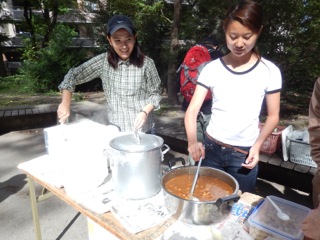
Last week I had the privilege of taking two students to volunteer at Imai Sensei’s soup run. One had been before, and since the experience impressed her so deeply, she asked a friend to join her. It was lovely watching them interacting with the men and women, both volunteers and guests. They treated all the people there with great kindness and respect, just as they themselves were treated.

Love,
Anne
Arahama & Mosul
- At October 18, 2016
- By anneblog
- In Annes Letters
- 0
Every morning when I greet the dawn, I wish that I were by the sea. As I watch light slowly unfolding the day, I can easily sense the ceaseless rhythm and energy that only waves, tides, and the vast expanses of sky can bring. Today after my morning ritual, I went inside and listened to the news. I learned of the well-planned offensive to recapture Mosul from ISIS’s relentless strangle and grasp. I thought of the ensuing, bloody tug of wars, ferocious between all sides. Each has strong beliefs and accepts that death is a necessary part of change. The more it dawned on me what lay ahead for Mosul, for all concerned, the more I felt the literal pull of the sea.
The coast is easy to get to from Sendai and does not take long. So, I heeded my intuition and went. I passed newly built homes, sadly with no grass, no trees, no gardens. I wondered what sort of mental and emotional world we have been creating since Tohoku’s life-altering events of 2011. Where is the famed Japanese connection to nature and to land? But thankfully, further on we passed newly harvested rice paddies and barns filled with tools to work our precious earth.

Arahama, the shore area, had not changed much since last March when I went there to pray for the soul of the dead. Huge trucks still lumber by, explanatory bulletin boards dot construction sites, and the tsunami-damaged school is still standing, and will continue to do so as a memorial to what people lost or left behind.


Pulled by the cyclical call of the tides, I worked my way to the beach. Once there I thought about Nature and death, of war and death. I pondered whether at this stage in humanity’s eternal evolution we need to fight, to have a life-threatening challenge to pull us decisively away from noise and glut and even wisely given counsel, so as to discover our own unique voice and the ground of who we are. Are we yet consciously our core?
The waves rolled and I felt the eternal dance of earth with moon. I watched the resultant tides, smooth today, but always harboring the possibility of turbulence and destruction within. I also deeply felt the horror of misplaced idealism, coupled with tribal wars: Mosul today, the world past and tomorrow.

Conflict and destruction are innate in all expressions of existence. But equally so, maybe more so, are harmony and efforts to transform the past and shape a world that is fair and honors all.

Love,
Anne
Yasukuni Shrine, Part II
- At October 02, 2016
- By anneblog
- In Annes Letters
- 0
War is something that I cannot get my mind around. It is completely incomprehensible to me. But precisely because wars are so prevalent today, I feel an urgency to try and understand why people resort to violence to solve their controversies. And coupled with that questioning is the universal tendency to highly revere soldiers who die in combat, no matter how alarming or questionable the conflict may have been. This effort to understand is not to condone war, not at all. It is rather a desire to get a glimpse into the psychology behind that unfortunate choice of behavior.
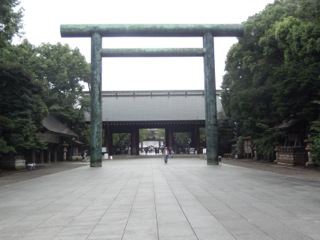

I wandered slowly and found monuments in honor of all those who sacrificed in war: from combat horses to mothers and wives grieving their slain loved ones. The sincerity and devotion of worshippers struck a deep cord, as one after another bowed, clapped twice, prayed, and bowed again. There was a sense of being absolved, of purifying one’s inner and outer being in order to move out into the world with greater clarity and purpose.

The energy at Yasukuni Jingu was intense, but subtle. Even though the shrine is relatively new, the long stretch of history could be felt everywhere, rising from the rich black earth of the complex itself. The accompanying museum depicted this land’s wars for literally 1000s of years as it struggled with shifting identities and changes in power.
Earlier eras seemed to express the “Art of War” with magnificent armor and breathtaking swords made by master craftsmen. As history worked its way closer to the 20th century, however, the horrors of conflict became more apparent and relentless.
What touched me most deeply in recent wars was a replica Kamikaze airplane. It was suspended graciously from the ceiling, a delicate Sakura blossom on the tip, a round red sun behind. I could sense the vulnerability and resolved determination of those highly intelligent, acutely aware young men, consciously flying to their deaths.
I thought of today’s terrorists and wondered what contrasts and parallels will be found as research opens up some of the unanswered complexities of past and current wars stemming from people’s troubling beliefs and actions.
Yasukuni Jingu is indeed a very meaningful Japanese memorial.

Anne
(1) Even though the friend who told me about his meaningful visit to Yasukuni Shrine equating it with the Budou Mind, other Japanese friends challenged that belief. They pointed out that the Budou Mind existed long before Yasukuni Shrine was built. And in fact, its purpose was in direct contrast to it.
The Budou Mind has been used for centuries for physical, mental, and spiritual training. The Boshin War ended the rule of the Shogunate, ushering in the Meiji Era in 1868. At that time Japan wanted to reestablish the Emperor system and become more like the West. She wanted to do away with traditional, “outdated” forms of military and mental preparedness that the Budou training represented. Therefore, the fine art of Budou was downplayed in order for Japan to become more “forward thinking” and to “catch up” with Western powers.
More specifically, Yasukuni Shrine is devoted to Japanese who fought and died for the Empire of Japan, which existed from 1868 to 1947. That is, from the reestablishment of the Emperor system in the Meiji Era through the Taishou and part of the Showa Periods.
Other buildings in that complex honor non-Japanese who served Japan. And yet another building commemorates all those who died in WWII, no matter their nationality. There is also a museum that depicts the history of conflicts in this archipelago for over 2300 years.
By equating Yasukuni Jingu with the Budou Mind, my friend has blended Budou with Japanese nationalism. However, they are actually very distinct, even directly opposed to one another. In fact, in today’s Japan, religion and politics are separate. No Japanese Emperor has ever visited Yasukuni Shrine since WWII, although several Prime Ministers have.
In 1952, over 40 million’s signatures were gathered by Japanese people in order to acquit A, B and C class war criminals. The number of signatures were about half of the population at the time. Then the Japanese government decided that they weren’t criminals anymore at least in Japan. Although it doesn’t mean Asian neighbors think the same way and the Tokyo Trial is overturned, it is no doubt about the half of Japanese at that time forgave them. I personally think the militaristic government are responsible for the war as a top, but I want to value the decision by the Japanese people.
Yasukuni Shrine, Part I
- At September 24, 2016
- By anneblog
- In Annes Letters
- 0
Yasukuni Shrine is extremely controversial. It is a Shinto Shrine that was built to commemorate Japanese war dead. Every country honors its fallen soldiers. So in that way Yasukuni Shrine is not unique. But what makes it questionable is that WWII convicted Class-A war criminals, performing crimes against humanity, are also interred there. And in the past few years, several Prime Ministers have gone to pay their respects to fallen heroes, not distinguishing between those who served the country honorably and those who abominably abused their positions of power. (1) Understandably, countries neighboring Japan are furious by the overt display of nationalism that these visits by Prime Ministers seem to suggest.

I personally detest war. Of course, I recognize any body’s need for an immune system, and a country’s obligation to protect itself. So, I understand the necessity of a military, even though I would love a world where the armed forces were obsolete: a world mature enough to dialogue solutions to conflict, and willing to work for the whole of humankind, not narrowly focused on national self interests. But that is wishful thinking, and I know it.
The other day a friend, a man who has practiced Kendo for years, told me of his recent visit to Yakukuni Shrine.

“Because the Japanese Mind is so strongly felt there.”
“The Japanese Mind?”
“Yes, Budou, ‘martial arts’, as you say in English. But that is not a good translation. It only touches the surface. The Budou Mind covers so much more, is so much deeper. It entails every ounce of our being, our keen focus, our complete Heart, our total Mind.
“But it is more than that, too. It is a discipline, a training that guides us to become not only single-mindedly focused, but also very intuitive. It is as if our whole being is open, listening, receptive. And in that state, we give, even as we receive what our surroundings have to offer and what we ourselves emit. It is a sacred experience. It is the unique Japanese way of being in the world.”

“Sorry, I don’t understand.” I said in wonder, “Is this allowed only to Japanese, or can others develop it also? Are Japanese born with it, or must it be trained into them?”
He went on to say, “We are this from before we were conceived. It is our soul. It is all around us. It is part of our traditional culture. It is how our society operates.
“One everyday example is gift giving. Whenever we meet someone, we take a gift. It is a way to honor that person. It shows our humility and respect for them. It is also a subtle way of honoring the gods. ‘I recognize the god in you’, as we bow before that person, offering our gift. In turn we receive the joy that can only come from giving.”
“But . . . but what does this have to do with your need to go to Yasukuni Shrine?” I asked, still uncertain.
“Everything.
“Budou energy is highly concentrated there. Even though it is often full of people demonstrating against war, the place is profoundly peaceful. Silent, deeply silent. Going there put me in touch with what it means to be Japanese in the truest sense of the word.”
“As a Japanese? Is that where you place your identity?”
“I place my identity not in this country, but in its Mind. It is subtle, it is deep, it goes to the core of my being. While at Yasukuni Shrine, I feel that power with every part of who I am.”

I thought about what my friend said, but was still very uncertain. I realized that my attitude was strongly influenced by what I had read of Japan in WWII. One small aspect of that complex and controversial issue was the plight of Kamikaze pilots. The militaristic government had taken the cream of what Japan had to offer — the best educated, the most cultured, the most intelligent young men — and had forced them to commit suicide for its own distorted purposes of nationalism, ego, and power. It covered over this vile abuse of the Budou Spirit by comparing those young men to the gracious, ephemeral beauty of cherry blossoms. How can Yasukuni Jingu be a spiritual place if such poisonous energy is an integral part of it?
“Anne, Anne,” he said to me, “the men at the top of the military government during WWII were the epitome of evil. Their sick minds and actions caused tremendous suffering. There is no doubt about that. But you have to look deeper. If you go down to the very foundation of life itself, you do not find evil. You find purity. You find goodness. You find an openness that can only express the essence of God, manifested in the very soul of humanity.
“The Kamikaze pilots did what they had to. They were forced to do it. If they had resisted, not only would they have been tortured and killed, but their families and anyone connected to them would have been severely punished, most probably murdered. The Kamikaze pilots did what they did in order to protect those they loved and who loved them. That is where they were great. That is where they were heroes. That is where they manifested the Budou Spirit.”

My friend’s words fascinated me. And because I always wish to test my own beliefs, I have decided to go to Yasukuni Jingu and see for myself what the place has to offer.
Love,
Anne
(1) For Japanese anyone who died for the country immediately becomes a “Kami”, or a god. In fact, according to Japanese Buddhism, when we die, we shed our human element, and become pure, divine essence.
The Bridge Under My Feet
- At September 11, 2016
- By anneblog
- In Annes Letters, Uncategorized
- 0
9/11/2016
Dear Family and Friends,
9/11 burns and sears through the world psyche. Far from over, it rages relentlessly with no margins of forgiveness. And that is precisely why, now more than ever, it is essential to focus on what uplifts, what gives hope, what builds and rebuilds in the face of tragedy almost beyond the limits of our human capacity to grasp or to understand.
And sure enough, as you know well by now, rebuilding has been of prime importance these past five years in Tohoku. Reconstruction includes pretty much everything from the ground up. Roads, office buildings, and homes may be the most overt of these many changes. But there are others happening as well.
Right below where I live there is a small stream that winds its way between homes and gardens. The bridges over it are old and the water pipes under it are rickety. The narrow bridge nearest my apartment is one small structure, in one small neighborhood. Even so, the government realizes the importance of keeping it solid and strong. Hence repairs have been underway there for the past few months.
Signs let us know what is happening. “Please excuse the inconvenience as we install new, strong water pipes. We are doing this so that when the next earthquake comes you will be sure of having water.” Or “This bridge is being reinforced so you can go over it with confidence.” And “We care about your neighborhood, so are doing our best to make it safe for you.”
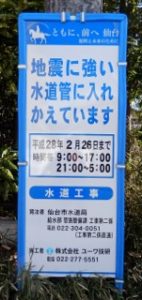
I either walk or ride my bike down that street daily, so the workmen know me, the lone foreigner in the area. I am often stopped so oncoming work vehicles can get by. And as I am waiting, one of the signalmen likes to chat. It turns out he speaks some English. “Hi. Where you from?” “I been to Niagara, Miami, Los Angeles, and San Francisco. America I like. My name is Asano Takashi, but please call me Hank.”

When I told him I wanted to write an article about the work he and his men were doing, he said, “Really? You crazy. This job very small, very, very small.” I asked him what would be better to write about. “Highways, big office buildings, the subway,” he said gesturing with wide-open arms.

“I know,” I replied, “but my theme is a bit different. I want to show the everyday life of people. I want my friends to know the many, many small things that are being done to rebuild this entire area of Tohoku. I think all these tiny repairs separately and together are very important.”
“I think you crazy,” he said with a beaming smile.
Maybe so, but precisely because of all the small, seemingly unimpressive repairs occurring everywhere, living here now can be very positive and uplifting. Of course, rebuilding is making life muddy and inconvenient; but it is also filling our psyches with hope. It gives a tremendous sense of security knowing the government cares enough to come to small neighborhoods to stabilize the very foundations upon which we live.

So indeed, the repairs happening on all levels, from the most impressive to the least significant, are all coming together to fortify our lives: our bodies, our minds, and our hearts. And that, in turn, allows us to look to each day positively and to the future with confidence that no matter what may come, we can and will endure.
Love,
Anne
Obon: Union of Heaven and Earth
- At August 15, 2016
- By anneblog
- In Annes Letters
- 0
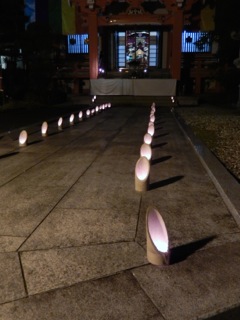
Every year in mid-summer when rice paddies are poignantly green and fields are joyous with produce, three very special days, called Obon, are set aside for worship and for prayer. During that period, ancestors make a sacred and special pilgrimage to this earth’s dimension. They long to commune, to bless, and to be with those they left behind.

In return, the living flock to graves, adorning them with flowers, incense, sake, and prayer. Cities vacate as people return to hometowns, to the beloved land that holds generations of family devotion, duty, and bonds.

At night in particular the souls of the deceased come alive, haunting graveyards and temples. They are seeking loved ones, hovering close, eager to give needed assistance and care.

Anne
Misaki’s Research Project
- At July 27, 2016
- By anneblog
- In Annes Letters
- 0
Dear Family and Friends
One university where I teach is for women from well-heeled families. Most of the students are intelligent and motivated, so it is a pleasure working with them. My writing classes are particularly satisfying because the students’ steady progress can so clearly be seen. So, I like to give them as much responsibility for their own learning as I can. If they are exceptionally eager and well prepared, I encourage them to do an independent research project.
This semester one student, Misaki, chose a topic that came directly from her own experiences. Last year she went alone to Los Angeles and this year to New York. She loved them both, and wants to return to America someday. But what disturbed her was the number of homeless people she saw. “Seeing those people really shocked me. I couldn’t imagine a life like that. It was so unsettling that it made me want to know more about this situation. That’s why I chose the research topic of homelessness.”
Her exploration has lifted her out of her comfortable worldview. Her upbringing and Japanese media never allowed her to see what was actually going on around her. But suddenly she sees street people everywhere. “They’re a lot quieter here than in America,” she observed. “They don’t sit on the street with a cup and a sign begging for money. In fact, they seem to be saying, ‘Don’t notice me, please.’ But even so, they are everywhere here: in parks, in train stations, in underground passageways. I’m amazed.”

Of course, I encouraged Masaki to volunteer at Imai Sensei’s Yomawari Group. That day she helped dish up rice.

And then she assisted men to select a nice shirt or trousers.

“These people are so polite. My image is changing once again. I went from the idea that there were no homeless here to being rather afraid of them. But now I see they’re people just like you and me. There’s such a thin thread between having a normal life and living on the street. I am surprised to find myself admiring these people very much. Life is really hard for them. And what sort of a future do they have? But they don’t give up. And today some of the men even told jokes and got everyone laughing.
“Wow! I have so much more to learn. My outlook is changing rapidly. So, I have to stay open so my opinions can keep pace with my experiences. Mind and heart: it’s important they work together as a team.”
Later I got a message from Imai Sensei. His weary outlook is also grounded in years of direct experiences. “We have some new comers – I mean, homeless people — this time, too. Some of them are in their 20s. We are afraid that they were sent to a construction site by a bad broker, who pockets a kickback from their wages. Sometimes they realize what is going on after a few months. Only a few of them {the bad brokers} are accused, because most workers are scared of YAKUZA.”
The problems are very deep. And that makes us even more aware that our humanity is one.
“Kizuna” — we are here to help each other.

Love,
Anne
六魂祭 Rokkonsai: Six Spirits Festival
- At July 27, 2016
- By anneblog
- In Annes Letters
- 0
“Kizuna” in Japanese means “emotional ties”, “relationship”, “close connections”. It also implies joining and working together as a unit.
Kumamoto here in Japan is another. Earthquakes, landslides, devastation, are all being met with an incredible sense of working together, of helping each other survive.
The Kizuna spirit that emerged in Tohoku in 2011 is world renown. It held us together, giving us courage to move forward, keeping us alive.
Fukushima’s Waraji


Iwate’s Sansa Odori

Yamagata’s Hanagasa


Aomori’s Nebuta
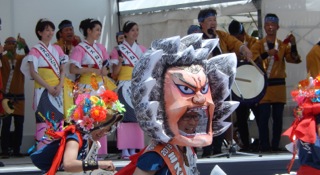
This joyous and powerful expression of Hope through Unity has been repeated every year since 2011. But this year, the sixth, marked this final combined celebration. And what a glorious grande finale it was.
Anne
The Still Small Voice: OISCA
- At July 27, 2016
- By anneblog
- In Annes Letters
- 0
Dear Family and Friends,
Worry. Apprehension. Fear.
The hallmarks of our era.
Whatever shocks and awes absorbs our greatest attention.
Extremes are never enough.
Amid the noise, where is the promised Still Small Voice?
Does it exist?
Has it ever?
If so, how can we find it;
Open our hearts to it; allow it to flood our being?
Not as a tsunami.
But as pre-dawn sunlight awakening the day.
The great unfolding of night, of sleep, of dream.
The intuitive hovering of animals.
Or the promise of plants.
Emerging out of darkness.
Silent, ever unfolding.

Stillness is everywhere.
Always.
It is our eyes and hearts that need to see, to feel, to open.
A forest planning-planting NGO.
Generations of promise.
Life slowly taking hold.
Whole forests emerging out of devastation and human toil.
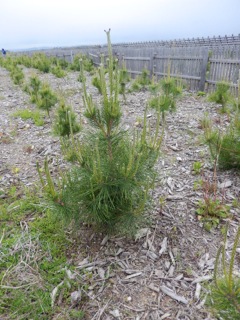
One Still Small Voice.
Steadily at work.
Rebuilding lives and hope, in the midst of today’s chaotic world.
One Still Small Voice —
for a thousand years.
Love,
Anne
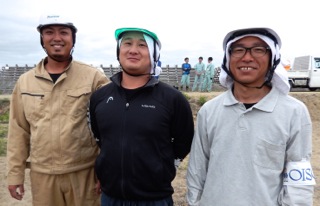
P.S. Is it by coincidence that as OISCA members planted trees on Saturday, the G7 met in Sendai to discuss the future of the world?
P.P.S. Today’s volunteers came in all shapes and sizes.


Yomawari and New Greens
- At July 27, 2016
- By anneblog
- In Annes Letters
- 0
Dear Family and Friends,
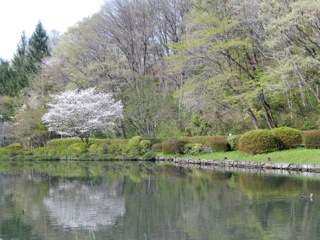
Some Japanese say they love “shinryoku”, new greens, even more than Sakura. The freshness of emerging life is uplifting and joyous. Many people celebrate by taking walks in the park or strolls along riverbeds.
I had not been to help Imai Sensei feed the homeless for several months. But recently I had time, so decided to go. En route there I came across students asking for donations for the victims of the Kumamoto earthquake. I met the same later in several other places. Many kind souls helped us in our time of great need, and still are. So we feel a particularly deep bond with those suffering today, albeit far away. And therefore, we give, we share. And that makes us feel happy.

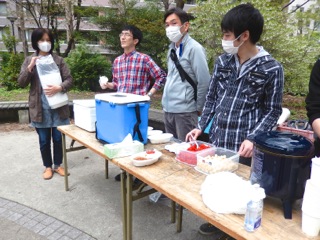
When I arrived, the park where Imai Sensei’s Yomawari NGO meets was full of kids playing ball, swinging and sliding, shouting and laughing, delighting in the freedom offered by that beautiful spring day. Gradually, like quiet birds, one homeless after another began to arrive. They sat on benches in the sun, waiting for the food truck to arrive.

Yomawari volunteers are like professionals now. After years of running the program, they know just what to do. Within minutes everything – food and clothes – were ready.

Recently there have been fewer partakers. That is because some now have a room, provided by either the city or NGOs. They have to pay a minimal rent, but some of these gentlemen receive social security or a pension. Others find odd jobs, like cleaning Sendai Station before dawn. Likewise, many still go to Fukushima to help clean the nuclear plant there. And now maybe some will find their way to the far south, to Kumamoto, to lend their efforts there. That leaves mostly old men as the ones who rely on Imai Sensei’s ongoing generosity and kindness. Despite the fewer numbers, often young students volunteer serving food and handing out clothing.
Compared to other places, Sendai’s homeless count is not particularly high, a few hundred. But that number does not include the people who while away time in internet cafés or other accepting places that never close. It also does not include those without jobs, but are lucky to have a place to live.
Yomawari is unique in that it provides showers and laundry several times a week. Most often the clothes are folded neatly, but returned wet. The men graciously accept them and head to parks or riverbanks, where they spread them out to dry.
“This season is particularly good for that,” one volunteer told me. “The rainy season has not started. And it is warm and beautiful.” Then she added, “Aren’t the ‘new greens’ reassuring? Doesn’t this season make sharing easier? And doesn’t sharing make everyone feel happier?”

Love,
Anne
Earthquakes and Sakura
- At July 27, 2016
- By anneblog
- In Annes Letters
- 0
Dear Family and Friends,
Several days ago there were two massive earthquakes in Kumamoto, a prefecture far to the south of where I live. Buildings tumbled, people died, and water and electricity were cut. Even now many are still housed in shelters, while aftershocks and mudslides continue to threaten both cities and towns.
Rescue workers and relief efforts are in full force as the area struggles to contend with the ongoing physical, emotional, and mental devastation. Those professionals are exceedingly well trained and prepared, so locals, although shattered, know they are receiving the best assistance possible. Likewise, miraculously, as of now all tsunami warnings have been lifted. And the nearby nuclear plant, ironically in a place called Sendai, is reported to be undamaged and functioning properly. These important things provide a flicker of hope in this time of great trauma and despair.
The intensity and tragedy of this situation are a definite reality of the complexity of the Japanese experience. Yet even as this nightmare overwhelms people in Kyushu, and our sincere concerns, prayers, and assistance extend to them, we know and have to accept that sadness is never the full picture. Japanese innately know that whatever is true is always balanced by its opposite, which can be equally as true, and often happening at the same time. Indeed, one such counterpoint to the Kumamoto tragedy is the delicacy of Sakura, cherry blossoms. They are coming to full expression throughout the nation at this very moment.
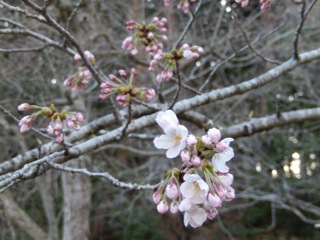
Even though Sakura seem ethereal, light, and joyous, they, too, convey a multitude of profound meanings. Throughout the centuries they have symbolized the complete cycle of life – from the joy of birth to the inevitably of death. Their delicate petals suggest the fragility and shortness of youth, and call on us to appreciate ephemeral beauty while it lasts. Yet, the thick, gnarled trunks promise us longevity, along with the necessity of obligation. These dark, twisted beings, often with only a shell remaining, have the privilege and power to support new life as it delights in its earliest expression. Yet they later work to feed the leaves in summer and protect dormant life in winter. And precisely because of this ongoing nurturance and annual recycling, the beloved Sakura shower us with the hope of rebirth and eternal life.

The blooming of Sakura is a cause for celebration. Starting in the south and moving northward, blossoms offer their shy message of hope and of joy. North of Sendai, Miyagi, the flowering occurs rather late. That enables the delicate cherry to brush the festivities of early May, when carp streamers announce the joyous presence of children. In particular, Kitakami, Iwate simultaneously adorns itself with both Sakura and streamers. They offer us the pleasure of sheer beauty, even as petals fall like snow or tears of gentle rain.

Kumamoto, and the nation with it, are weeping now. Yet even as this uncertainty continues, we are taking time to appreciate beauty while it lasts, knowing that it must die, but will recycle again and again, and forever yet again.
Love,
Anne
OISCA: Marriage of Science and Nature
- At July 27, 2016
- By anneblog
- In Annes Letters
- 0
Dear Family and Friends,
Nature and Science. Two powerful forces precariously teetering in their ongoing attempts to find balance. Hopefully, what they build outweighs what they destroy. But no guarantees. Climate change, pushing us to the edge of challenge, yet opening opportunities to shift values, to see ourselves and our creations – even our most advanced technology – as an integral part of the Nature World, the Web of Life.
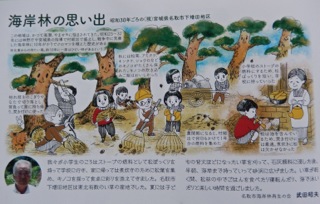
Nature and Science. Where do they dance in harmony? What are examples that encourage a happy marriage between these two forces calling for dynamic involvement and change?

OISCA. A Japanese NGO devoted to planting trees. Worldwide. And also very close. Natori, a town bordering Sendai, blessed with ten years of OISCA support. A project to replace large sections of the once vast coastal pine forest, obliterated by the March 11 tsunami.
OISCA is wise. It uses the expertise of locals for advice and direction. OISCA supports; it does not dominate. Together all involved build a future based on trust, respect, ancient wisdom, modern science, and hope.
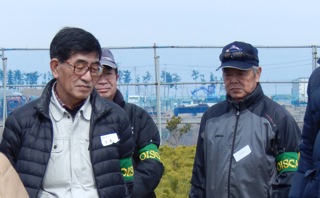
OISCA is smart. It works beyond and around the planting of trees. Total commitment to the whole. Once yearly, average citizens come to help plant pines. Year round OISCA and locals hold meetings, seminars, and educational programs, both in town and in the field. Experts provide clear explanations of where we have been, where we are going.
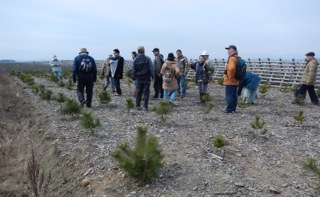

We stumbled our way over soft earth, covered with wood chips, and trenches to catch life-giving water, much needed this year of minimal snow and rain. We learned how crucial caring for the roots is, and how red pines and black have different needs.

In stark contrast were adjacent patches, planted by a profit-oriented company. The trees there looked sad and weak, dwarfs next to their neighbors, although planted at the same time.

OISCA and all those who assist use Science in total accord with the Nature it serves. 100 years from now, 200 (?), 1000 (?) . . . We are planting today so the future, which we personally will never see, will prosper.

Love,
Anne


