
Volunteering – Kumiko
- At July 27, 2016
- By anneblog
- In Annes Letters
 0
0
Dear Family and Friends,
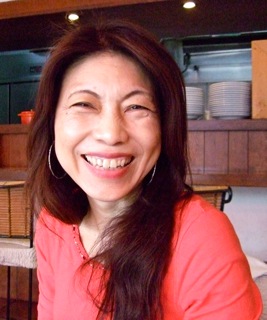
Kumiko Suganami is involved in many activities in Sendai. She is a licensed translator, so has many opportunities to work with foreigners. She also works in a university that has overseas students, so she is kept busy helping them adjust to life in Japan. Besides that, also works closely with Japanese students, of course.
The earthquake and tsunami of 2011 left much devastation, which is still in the process of being cleared up. However, now the major form of discordance is actually more psychological than physical. Towns and villages along the coast were completely destroyed, and the survivors were scattered hither and yon. Some chose accommodation by themselves, while others opted to live in temporary housing provide by the government. Since entire communities were broken up, most of the displaced survivors feel rootless and alone. They had been connected to their neighbors for many generations, so living next to people they just met has been very disconcerting for many of these strongly tradition-bound folks.
Because of these problems, the local governments and NGOs have been working to psychologically and emotionally help survivors. So now there are many volunteer programs available. Since “therapy” in Japan often means providing mental and emotional diversion, rather than dealing directly with psychological issues, quite a few of the volunteer programs are for teaching purposes and involve students from local universities.
Kumiko has been involved in one group, which she herself set up. Almost every week she takes about 30 students from her university to Arahama, an area of Sendai wiped out by the tsunami. The students work mostly with children, giving lessons of all sorts. But adults get choral, handicraft, and hobby sessions as well. The student volunteer also arrange parties to which people from that area, now spread all over Miyagi Prefecture, can come together to be with their old neighborhood friends. Those are times of great healing for everyone.
Recently the Miyagi Prefecture government allotted more funding for volunteer activities. One reason is because children in particular are having a very hard time settling down. Their attention spans are short, and they do not feel as if they really belong anywhere. Likewise, many adults feel very unsettled and insecure, not knowing what kind of future is open to them. The Trans-Pacific Partnership is also an added worry for many folks in this area. If the agricultural and fishing industries become open to less expensive imports, there is a strong possibility that those sectors of the economy in this rural region would be totally wiped out. In other words, not many feel secure now. And the mental strain is being felt everywhere.
March 11, 2013
- At July 27, 2016
- By anneblog
- In Annes Letters
- 0
Dear Family and Friends,
March 11, 2013. It is a time of pause as the world cycles round once again to this profoundly significant date. Last year marked the first anniversary of the Great East Japan Earthquake and Tsunami. I had spent an entire twelve months fully involved and committed to this area because of the disaster and devastation that had instantaneously transformed all of our lives. My connection and the process of recovery were so intense that I could only compare it to the umbilical cord connecting a mother to the precious child in her womb. Maybe because my connection was so strong, last year I decided to deliberately leave Sendai for a few weeks. I set out on March 11. It was a symbolic choice, pushing me forward and inviting me to engage in other parts of the world.
Yet, for the second anniversary of that time so embedded in our hearts and psyches, I decided to stay in Sendai and honor what happened and what has been evolving since then. Downtown the night before, March 10, people were selling candles. They were encouraging all of us to join a moment of silence and prayer. The flickering lights were reminders of the souls now existing on the Other Side.
Even though I work for and with others, I know that it is my nature to take the road less traveled. So today, March 11, I decided not to join a group, but rather to spend time quietly alone in a temple area I deeply love. When Sendai was build over 400 years ago, it had a ring of temples and shrines surrounding the city center. That allowed this beautiful city to be within the circumference of spiritual energy and benevolent protection. Even now many of those temples and shrines still grace the area where I live. And that is where I headed.

More by luck than good management, I was there at the exact time the earthquake had struck two years before, 2:46pm. Just at that moment, I head the roll of a temple drum, and I knew memorial services were beginning. The drum sound reverberated over the hills and hundreds of graves; and then enormous gongs began their message of condolences and eternal respect. First from one temple, then from another, and yet another. Unlike the joyous clang and clumsiness of church bells, Japanese gongs emerge from deep within the very fiber of Being. It is as if the great OM of the Cosmic is rising up out of the depths of the Void, and sending its profound message out into the world.
I stood there among the graves with their new and wilted flowers, their tiny Buddha statues blessing the deceased.
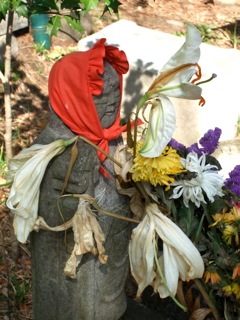
I listened with every fiber of my being and felt the profound wonder of life within the folds of eternity. I could only pray for the souls of the departed and for those of us left behind. We face the challenges, ongoing, of bringing life and balance back into a world that is outwardly finding adjustment, but inwardly still struggling for meaning and hope once again.

Love, Light, and Life,
Anne
Volunteering
- At July 27, 2016
- By anneblog
- In Annes Letters
- 0
Dear Family and Friends,
Hikaru Kamada is my student. She is exceptionally eager and motivated in whatever she undertakes. She always wants to learn and to expand her experiences, so she takes on projects and volunteer activities whenever she can. Before the Great East Japan Earthquake and Tsunami, for example, she tutored a junior high school student, taking her from near failing to a strong A in all subjects. Since then she has been involved in volunteer work in temporary housing units. She is also the one who organized the international event that was held at Miyagi Gakuin Women’s University a few weeks ago. She did that part of the Kizuna-Project program almost single-handedly. As you can see, she is a truly amazing person.

Since the earthquake Hikaru has hooked up with a program in her university called MGLac. That means Miyagi Gakuin Liaison Action Center. This group is connected to an NPO called Miyagi Fukko Shien Center, which is Miyagi’s Restart-Support Center. MGLac links volunteers with people living in temporary housing complexes. It seems many other universities also have volunteer programs.
It seems that ADHD (Attention Deficit Hyperactivity Disorder) is on the rise among kids in the Tohoku area. This is especially true of children who lost their parents or homes in the disaster. “They have a really hard time concentrating,” Hikaru told me. “So they are really difficult to teach. But it is important to keep trying.”
Many volunteers, often students and housewives, go to areas where people are still suffering and feeling unsettled in order to give support. They also provide various activities. Hikaru has taught music in one complex and now she instructs youngsters in English in another. An older woman I know is connected to another university’s branch of Lac. She is involved in a choral group for adults. She says it helps everyone in the community very much. People in temporary housing feel cared about and enjoy the carefree social occasions the volunteers provide. And the volunteers feel better, too. They know they are helping others and making a difference in their lives. So these joyous times hold the community together and strengthen it in many important ways.
Hikaru is also involved in a camp for about a hundred children from ages 7 to 12. Volunteers are mostly university students, many of them from foreign countries. The ones Hikaru works with are from the Scandinavian countries, Denmark, Germany, France, England, and Chile. She is the one Japanese in a group of four volunteers. They teach basic English. She loves it. And like my adult friend, she says it gives her a sense of community and of purpose.
There are a lot of volunteer programs happening now. The Miyagi Fukko Shien Center has a webpage, so it is easy to get started. “You just have to get out and do it,” says Hikaru. “And the need is so great. The more you get out and get involved, the more you realize how unstable so many kids are these days. I worry about Japan. So I’m doing the best I can to help other people and my country as well.” And because of people like Hikaru, the future of Japan does indeed seem hopeful.

Love, Anne
PS. Just after this essay was ready to send out, I got a very interesting e-mail from another friend. This is what she said:
I spend most my energy for volunteer job at Arahama area. In Sendai city, only Arahama area was severely damaged by Tsunami on 11th March, 2011.
I came across a group called “Wakamatsu-kai” through a person who graduated Miyagi University of Education several years ago. I am very ashamed that I had absolutely no idea what “Minashi Kasetsu” means.
So many people lost their houses and started living in temporary houses or apartment called “Kasetsu Jutaku.” Those people are under the power of country, prefecture and city (town). So they have been receiving food, goods, volunteer people and all sorts of concerts by famious musicians or artists.
However, people who rent apartments or houses with their own money are considered that they live in “Minashi Kasetsu. (Presumptive Temporary Housing) They have received absolutely No food, No goods, No volunteer people and Concerts were out of question!
I started gathering students who are interested in supporting the people from “Wakamatsu-kai.” First, students started teaching 6 children every Thusday night. Then I started attending Wakamatsu-kai’s monthly event with some students. I went to their Christmas Party on 23rd December for the first time with 4 students. The party was gorgeous as the organiser was a young president of 31 years old who owns two businesses in Sendai. Food was wonderful and a very famous singer came to have a live performance at the event. Besides a world famous teddy bear artist also came with a huge Teddy Bear and lots of middle-size bears. When I saw the young president called Hirotoshi Seki, I was surprised by his bright aura!
And also I forgot to mention that in supermarkets there are people encouraging us to make monthly contributions to provide uncontaminated milk for babies and children. So the work continues. And so many are participating in activities to get this area back on its feet, physically, economically, and emotionally.
Kizuna-Internatioなる
- At July 27, 2016
- By anneblog
- In Annes Letters
- 0
Dear Family and Friends,
Did you know that during a major earthquake you should not turn off the gas? I had never realized the danger of that (because of an explosion) until I recently joined a Kizuna-Internatioなる joint program in Sendai. Kizuna’s subtitle is “Youth-Exchange Project with Asia, Oceania, and North America.” It is part of a national organization called JICE, or Japan International Cooperation Center. Internatioなる is a group promoting international relations between foreign and Japanese students here in Sendai. Impressively that local club was started last year by one of the undergraduates of Miyagi Gakuin Women’s University, where I teach.
Kizuna, which in Japanese means “to join”, encourages communication and unity between its members. Its purpose is for education and cultural exchange. The particular program I attended was sponsored by the Japanese government in an attempt to lessen people’s fears about the current situation in this country. Many foreigners have the idea that all of Japan is now dangerous due to nuclear fallout. They also tend to believe that no real progress has been made in hazardous areas. That of course means that business is down. Tourists do not want to come here and many governments are restricting the import of Japanese goods, especially agricultural and fisheries products.
The day of the Sendai workshop there were a total of about ninety students from nine Asian countries: Afghanistan, Bangladesh, Bhutan, India, The Maldives, Nepal, Pakistan, Sri Lanka, and of course, Japan.
(Afghanistan)


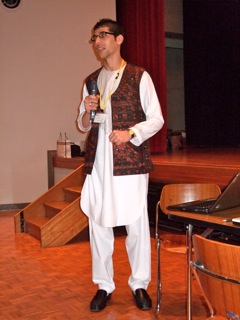


(Two Pakistan photos courtesy of Maajid Maqbool)
Prior to coming to Sendai that enthusiastic cluster of students had visited several places along the devastated northeast region of this country. In particular they had witnessed firsthand the destruction in Ishinomaki and the nuclear challenges in Soma, Fukushima. After Sendai they would go to Tokyo for a few days before returning to their home countries to teach others what they had learned while here.
On the day of the Sendai program, most participants wore traditional costumes, so the auditorium was vivid with colors and designs of all sorts. Speeches and presentations were in Japanese and English, with a rich variety of accents and intonation. The energy was alive and positive. Everyone wanted to learn as much as possible. So they listened attentively, asked questions eagerly, and expressed their opinions openly.


I had been asked to give a short speech. I told about my personal experiences, with special emphasis on how remarkable the Japanese had been and still were. I also mentioned my book Letters From the Ground to the Heart. Interestingly, afterwards several people came up to me and commented that was the first time they had heard about the remarkable attitude and behavior of the Japanese people after the March 11 tragedy. They pointed out that the people they had talked to tended to be very self-depreciating, so never mentioned themselves. Rather they stressed their gratitude for others’ assistance. I was pleased that they could see the Japanese in a very positive light. And I hope there will be better understanding and constructive work between Asian nations in the future.
After my talk there was a general discussion, and then a representative from each country said what they had learned so far during their stay in Japan. They also told us how they planned to use the information gained when they returned home.
Most said the same things in terms of safety measures during an earthquake:
Don’t run out of the building.
Protect your body, especially your head and torso.
Be sure of your own safety before helping others.
Only one group was astute enough to point out that staying in a building or not depended on the situation. In Japan the architecture is designed to be earthquake resistant, so staying inside might be the best option (but even then, not always). In other places getting out of buildings is essential for safety. For example, several Japanese students died in the New Zealand earthquake because they hovered inside buildings when they should have gone outside.
Another thing all the students said was that the nuclear danger was much less than they had believed. Before coming they had imagined the entire Tohoku region, if not all Japan, to be in serious trouble from fallout. But on this trip they learned that western Tohoku had not been touched by the disaster, except indirectly. And they could see that eastern Tohoku was slowly getting back on its feet.
The students had also been told that areas outside the Fukushima No-Go Zones were 100% safe. They had visited a farm with strawberries growing in greenhouses and could see that the plants were uncontaminated. However, from locals’ point of view that information is probably very questionable. Farmers as far away as Sendai report higher levels of radiation in their fields. It is slight, but still higher than before the nuclear problem. This was not mentioned in the workshop.
When these bright souls return to their countries, they hope to teach the people about the situation in Japan. They plan on using several methods: the Internet, Facebook, and social networking, of course. They will also use newspapers, magazines, and radios for more traditional methods. Also they will make T-shirts, bookmarks, and fliers in schools, and even hold parties and family gatherings to spread the word.
From what the students reported and how they behaved, it was easy to see their focus on and commitment to Asian unity. There was a sense of power and pride in being part this territory. And for many complex reasons, both obvious and subtle, Japan is wisely taking a lead in establishing goodwill between many countries in this vast and varied region of the world.

Last Frog Give-Away
- At July 27, 2016
- By anneblog
- In Annes Letters
- 0
Early February 2013
Dear Family and Friends,
It has been a while since I wrote to you. My daily life is so demanding that I do not have the opportunity to step out of it to do other things, as I would like. But now that universities here are on “spring” break (despite the snow and ice), I was able to head back to Imai Sensei’s Yomawari Group to volunteer at his soup run for the homeless. It was good to see old friends and meet new ones.
All the volunteers there know exactly what to do and go about it quickly and efficiently. Things run like clockwork, which is good since we have a limited time in the kitchen and dining area.


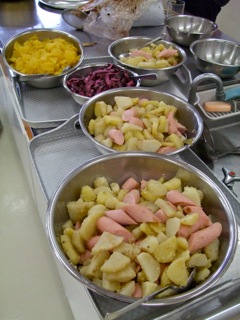
Today’s menu was different from the vegetable curries that are usually served. Maybe because of the cold, a bit more meat was in order, so today the men got sausages and potatoes, along with nourishing miso soup.
We volunteers got large rice balls and soup after completing the preparation work.

I was surprised to see more homeless than usual. And was even more saddened to see several young faces among the crowd. One or two were even in their 20s. The job situation here for people outside of construction is very bad. So Imai Sensei’s responsibilities continue to expand. He makes every effort he can for the homeless here. Last month he arranged for them to get medical checks, so today they received the results. He also makes sure they get showers and their clothes washed. He tries to get funding to pay them for odd jobs, such as picking up trash in Sendai Station early in the morning before the commuter rush. He also works tirelessly to find inexpensive housing for them. But since the earthquake that has become exceedingly difficult.
Today was a bit unique in that I gave the volunteers the very last critters of the 500Frogs Project.
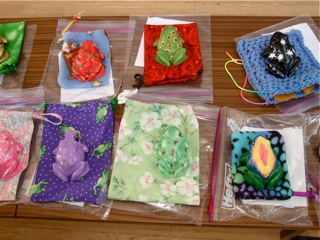
For almost two years before this, friends and I handed out these hand-painted gems in schools, community centers, and at festivals. But it seemed very appropriate to give the last batch to the volunteers at the Yomawari Group. Not only do I admire their work tremendously, but also money from the sale of my book Letters from the Ground to the Heart goes to them. So somehow their getting frogs seemed to be a perfect Grande Finale.
One of the leaders thought the frogs would go to the homeless. But when I explained that they were for the volunteers, her face light up. “Really! For us! How kind!” She was genuinely touched. Her generous spirit thought only of those she served, never of herself.

Each volunteer carefully chose one or two frogs, cuddled them close, and walked away beaming. That made my day, and surely will be part of this wonderful, love-filled project forever.

And I do indeed hope that “kaeru” (“come home”) will become a reality for the many that Yomawari so selflessly serves day after day, after very sacred day.
TRE Workshop
- At July 27, 2016
- By anneblog
- In Annes Letters
- 0
December 2012
Dear Family and Friends,
Do you know TRE? Chances are you don’t. It stands for Trauma Release Exercises (or Tension Reduction Exercises). It was started by a man named David Berceli, who is an American traumatologist. He lived in Lebanon in the 1970s, so war with its fear and destruction was an integral part of his daily life. One TRE facilitator, gave a detailed description of that time. He said, “In Lebanon in the 1970s, David made key observations about how our bodies react to stress. During a bombing, he took shelter in a basement. Surrounded by refugees, and with two children on his knee, he noticed something very important – each time a bomb struck, both the children and adults instinctively curled forward into a fetal position. Without words, and with perfect choreography, it happened every time. Not only that, but the children on David’s knee were shaking, and his body wanted to shake too. Later, when he asked the other adults about this, they admitted that they too had wanted to shake, but had stopped themselves from doing so, lest the children think them afraid.”
Later Dr. Berceli went to African countries that were also involved in armed conflict. Those years of unsettling experiences led him on a path of existential querying. Why is this happening? What is going on in the hearts and minds of the victims and perpetrators? What can be done to bring healing and balance back into the lives of those who suffer?
These probing questions drove him to get a PhD in Clinical Social Work, to study and practice counseling, to learn about body therapies, and even to get a degree in theology. All those avenues were important, but something was still missing. That was when he began to seriously observe the reaction of animals under stress. He noticed that when threatened, they tend to shake, sometimes rather violently. They do this not so much from fear, he reasoned, but as a way to release stress. Dr. Berceli noticed that animals, via shaking, were able to instinctively let tension ride through their bodies and to release it quickly, thus returning quickly to a state of inner balance.
Please look at this YouTube:
http://www.youtube.com/watch?feature=player_embedded&v=5M5Lc_iJjdI
But we humans are different. From early on we are socialized be in full control of our bodies and emotions. We are rewarded for sitting still and not doing what the body was designed to do: shake to release extra energy and stress. So we lock down and into our tension, often suppressing it in for years. We hold grudges and seek revenge. We use our minds to cling to anger, fear and disappointments. We develop physical symptoms of pain and other disorders. And the more we hold on, the less we let go. And the less we let go, the more out of balance we become.
Dr. Berceli identified three regions where we carry stress. One is neurological; that is, in our physical bodies. Another is psychological; that is, in our minds and emotions. The third is spiritual; that is, in our belief systems. When our worldview is shattered, how do we find meaning and purpose in life once again? The TRE technique focuses on the neurological dimension, but since all three areas are deeply connected, the TRE process can open the way for psychological and spiritual healing as well.
Dr. Berceli also distinguished between different types of trauma. There is “hard trauma”, which is caused by a single overwhelming event. Examples might be a natural disaster, the death of a loved one, or an instance of domestic violence. “Soft trauma”, on the other hand, is ongoing and can be so profound that it is almost unconscious and fundamental to us. Never-ending stresses at our job, ongoing emotional abuse, and chronic lack of sleep are all examples of this. A third type of trauma is called “vicarious trauma”. This comes from events that we witness, either in actuality or on the news, and which affect us deeply and negatively. But whether trauma is “hard”, “soft”, or “vicarious”, it is crucial to let it go as soon as possible.
Among the specialists coming to Tohoku are a couple from the very south of Japan, who now visit several times a year to give no-cost TRE workshops. I had the privilege of attending one of their two-hour sessions. To my delight, the process was clear and easy to learn. And once you know it, you can do it on your own without professional supervision.
This amazing therapy consists of seven specific exercises. The process has been very carefully thought out. The steps move from one part of the body to another, from one side to the other, and very significantly from outer to deep within.
Poses range from standing to sitting, from bending and holding to lying down. Each exercise stretches and awakens a different part of the body, so gradually you begin to let go of tightly held tension, some so deep it is in the very core of your body and has been unconscious for years.
Joe, one of the facilitators of this workshop, said: “Each exercise stretches and awakens a different part of the body, gradually relaxing the psoas muscle, at the body’s core. This is the muscle that joins our upper and lower body, and that pulls us into the fetal position in times of stress. As this muscle is stimulated, it starts to quiver, which is what the children and adults experienced during the bombing, and what we’ve all experienced at some point or other in our lives. This shaking releases excess energy from our body, the completion of which tells the brain that the danger has passed, and that we can now safely return to the way we were.”
The final exercise, “the resting pose”, is unique. At this point the body starts to quiver. Each person responds differently, however. For some there is an even hum of vibration; for others there are rhythmic waves going from head to toe; others experience trembling and shaking; while others may experience jerking, or even thrashing around vigorously as the body works to clear itself of negativity. All this occurs perfectly naturally. The intellect is suspended, which opens a way for the body to do whatever it needs to do.
As I was going through the TRE process, two images came to mind. One was of a huge ice block in the Arctic. It was spring, and the massive block was beginning to thaw and then to break up. These were enormous, heavy pieces of ice, but they did indeed respond to warmth. And eventually they ever so slowly floated away. The second image was of a wet dog. As we all know, in order to get rid of water on its back, a dog will shake violently several times. That allows the water to fly off its coat. Then the dog is free to run and play unencumbered once again.
TRE seems to be like these images. It can break up enormous frozen blocks of trauma within us, allowing them to start moving again. And by shaking, the body can throw off negativity clamped deep within until we are able to physically, emotionally, and spiritually move more freely. Likewise, TRE has an additional benefit. It can easily and safely be done in conjunction with other therapies, if desired.

Tohoku people by tradition and training are reticent to speak of emotional issues, so they hold upsetting feelings within, and bravely soldier on. In TRE you do not speak. In fact, you do not even have to be aware of what trauma is being released or to re-experience it psychologically. So, it seemed perfect for Tohoku people. And it is. The workshops Nana and Joe offer here are always full and very much appreciated.
Nana and Joe give freely from their hearts to us here in Northeast Japan, many of us still so deeply troubled and confused. And as they do so, somehow this area is being healed. One ordinary person at a time. And then from one to the many.
As I continue doing the TRE exercises on my own, I realize more and more that each one of us has the potential to heal Tohoku – and the world – so it can become its beautiful, radiant, natural self once again.
War and Natural Disasters
- At July 27, 2016
- By anneblog
- In Annes Letters
- 0
Mid-November 2012
Dear Family and Friends,
After the devastation of Hurricane Sandy and as Thanksgiving approaches, maybe the following wise reminiscences are very pertinent.

Tsuyoshi Minegeshi San was born in 1928. That was a very precarious time in world history. He, like so many others, was educated to believe in nationalism and duty to his country. At age 16 he went to a special school that would prepare him for war. He was pleased to be there and felt superior because of his uniform and healthy food. Likewise, he got a blanket, special sweet bean cakes, and coupons for cigarettes. He also was not a regular foot soldier, so felt professional and proud.
This special corps was very hard to get into, and Minegeshi San was the only one selected from Miyagi Prefecture. The entrance examination involved not only a written test and interviews, but also a long investigation into several generations of his family. At some point one of his uncles had been in the Emperor’s exclusive military, which added greatly to Minegeshi San’s credentials.
Minegeshi San fought in WW II. He witnessed and was part of shocking happenings. He will always remember August 15, 1945, hearing the Emperor’s speech of surrender. It came as a complete shock to him, then 18 years old. “My whole life and focus had been on the nationalistic training and propaganda of the government. When that collapsed, I was confused and uncertain where to turn. As I left the army, I was fortunate to be given a blanket and food to see my home. But people were desperately poor then, so I was robbed even before I had gotten out of Tokyo.
“It was also strange for me to see the Japanese Army and how it changed. The Emperor and government wanted to be sure there was no trouble as the country pulled itself out of the devastation of war. So the army changed from being the aggressors, to becoming a group whose mission was to protect the American military in Japan.
“Everyone was so poor then. And the yen was worth so little against the dollar. So we would rummage through rubbish bins, especially ones near American military bases. Whatever we could salvage we either used or sold. We lived from hand to mouth.
“Surprisingly, after Tokyo, Sendai had the second largest army base in Japan. That is where many American troops were sent. I volunteered there when I first got home. I was amazed by little things. For example, American GIs ate carrots, cucumbers and onions raw! I’d never seen anything like that in my life. We always cooked or salted our vegetables, but there they were stuffing them down completely raw. Even though I eat salad now, the image and feeling of surprise are still with me.
“We were also astonished to see huge American tankers arrive. They brought gasoline since there wasn’t any here. They also brought in American food for the GIs. I learned about coke and got lots of chocolate. The coke tasted better back then. And the bottles were in the shape of a sexy woman. We all loved that, of course. Now coke isn’t the same, so I don’t go near the stuff.”

I asked him the differences between war and the recent tragedies. He threw back his head and said, “Completely different. Completely different.
“War involved the entire country. And it was based on a questionable mindset. The propaganda machine was in full operation, so news was distorted and controlled. And there was also ongoing hunger and fear. Before and during the war the plight of women was hard. There was a lot of repression and they had no vote. Now their lives are so much better.

In addition, farms back then were huge and owned by a few wealthy families. The farmers who worked the land were almost life serfs. They were always hard working, but very poor. After the war those huge tracts were broken up and the farmers themselves got parcels of the land. So the entire structure of society changed. So our minds and hearts had to adjust to a whole way of thought that was different from what we had been trained to believe.
“The recent earthquake and tsunami devastation were terrible, as we all know. And in many places things are still very bad. But that disaster was immediate and did not destroy the entire nation. Likewise, the system of government and the general running of society were not ruptured. So, even though we are still struggling, we are all working together in a land of peace and hope.
“The Fukushima nuclear problem, though, is another matter. It is much more complex. It involves not only the devastation of the plant, but also the land and sea around it. It took away the livelihood of so many, the childhood of the young, and the people’s trust in the government. It is a terrible, ongoing tragedy.
“Yet at the same time through all these dark days, the structure of society has held. As individuals we are all evolving our way of thinking about life, and hopefully that will bring about positive results for this country as a whole.
“We Japanese have always had cycles of hard times. In fact, we actually expect them. And we don’t give up. So I am confident we’ll get through this challenging time and be stronger for it.”

“If there is anything I would tell young people, it is this. Everything changes. Today maybe you are rich. Tomorrow you could be poor. Today you are well. Tomorrow you might become ill. We are here today, now. Tomorrow we have no idea. So be active. Create peace wherever you are. That is something that we hope will last – but only if we make every effort to manifest it and then to keep it alive.”
Love,
Anne
Minami Sanriku-cho, Shizugawa
- At July 27, 2016
- By anneblog
- In Annes Letters
- 0
October 2012
Dear Family and Friends,
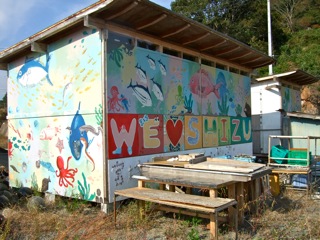
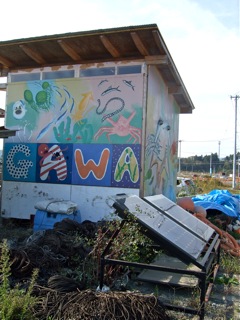
A few weeks after the tsunami of last year a friend wrote to me and told me of a project he and his art students were involved in. They were painting a small shed in northern Miyagi Prefecture in a village called Shizugawa in Minami Sanriku-cho. That useful edifice had been constructed for fishermen by another set of university students. The fishermen were grateful because they had lost everything. But they wanted something bright and happy to encourage them as they struggled physically and emotionally to come to terms with what was happening at that tragic time. So they asked my friend to help them out.
Not only were the images joyous and bright, but also the small hut became a focal point for the struggling survivors. In fact, it became a sort of community center. Meetings were held there, foreign volunteers congregated there, and fishermen gathered there each day to encourage each other as they faced the daunting tasks before them.

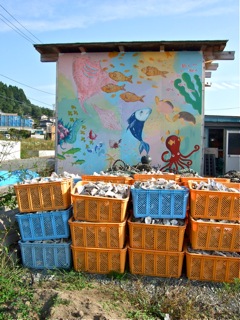
Since that time much has changed. The fishermen were finally permitted to build a proper warehouse for their goods and many volunteers left, so the merry little hut no longer held the vital importance it once did. In fact, my friend assumed it had been dismantled. Even so, I wanted to go check out the place on the off chance the walls themselves might still be hidden away somewhere, stowed as something joyful to remember. So after more than a year of trying to find a time we both were free, my friend, his wife and I set off.
It was a lovely drive through northern Miyagi at this time of rice harvesting. There were poles of rice drying and old farmhouses with thatch or slate roofs. The farms were alive and gorgeous with their backdrop of high blue mountains contrasting the golden fields. But as soon as we got to the coast, things began to change. Suddenly devastation was everywhere.
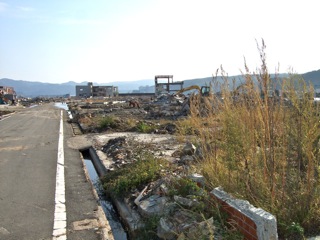
I was astonished to see how far behind the clean up job in this area was compared to places closer to Sendai. There were still large chunks of concrete covering much of the now-open space. Frames of buildings still dotted the landscape.

Volunteers are still coming from all over the country to help out. Not as many as before, but they are still there. We even saw a tent village where they were staying.
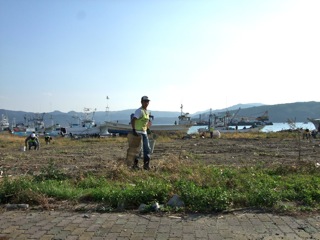
But people had made lovely cutout messages on their property expressing thanks to those before them and hopes for the future.

Water was everywhere. The earth had sunk about a meter because of the tremendous force of the earthquake, so the water table was higher than before. Despite the mud and muck, however, backhoes were working non-stop in an effort to clear out the rubble.

Typical of other places along the coast, Shizugawa was an uneven blend of effort. Some areas were still totally unusable, while others were getting back on their feet. As we came into the coastal area, for example, sitting in the midst of mud and debris was a new temporary shopping center. It was small, but had shops of all sorts. There were restaurants, of course, and fishmongers. There was also an electrician, a chiropractic center, and a beauty parlor. The place had opened about half a year ago and gave hope to the locals that better times were soon to come.
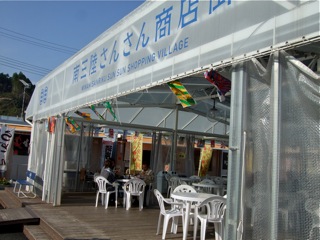
There were other signs that things were moving forward, too. Of course, we had to give our greetings to the vociferous fishermen of the year before. When we explored the area to find them, we came upon a large office and warehouse. And there they were. Of course, they invited us in. They told us that this place had opened in the early part of the year. They said they were doing well and then proceeded to explain.
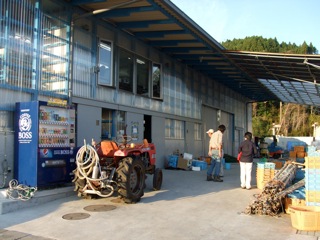
It seems before the earthquake there were two setups for fishermen. They could either work on their own or join a union. If the chose the latter, they had to give all their catch to the union and in turn they all received the same wage. Profits went to the union. So after the tsunami, twelve friends decided to forge a different route. They started their own cooperative. As with the union, they give all their catch to the group, but unlike the union, their earnings fluctuate according to what they make on the market. That is, the profits go to the fishermen, not to the union. They have found that they are making far more and are enjoying the work much more, too.
Their leader told us that the tsunami actually helped the fishing beds. Before they were filled with reeds and other plants that got in the way of growing scallops and oysters. But the raging tsunami waters cleared all that away, so now they can easily grow their shellfish and also seaweed. So it has been a real boom for them.
I asked where the seafood went from there. “To be honest, I don’t know,” he admitted. “We are fishermen. That is our job. We sell our goods to a distributor and then head back to our boats. That is our life. That is our interest. The rest if up to others to be concerned about.”
But he did know about the future plans for his town. Unlike in other areas where there is an ongoing struggle between the government and individuals over property rights, people in Shizugawa seem eager to get rid of their water-ruined land. The earth has sunk too much for building again, so better to get rid of it, even at a reduced rate. And now the government has extended time allowed in temporary houses, so there is not the rush to get out and rebuild. Even so, most active members of the community want to get out, want to have a place of their own. “If we stay too long in those government places, we will become lazy and complacent. Don’t want that. We are strong and want to stand on our own two feet, have a place of our own, have our lives fully back again. We need our own houses for that.”
The town’s government has put together a workable plan for the future. Now they, like everywhere else up and down the coast, are waiting for the federal government to come through with promised funding. When? No one knows. “But we aren’t sitting around waiting for that day,” the fishermen’s leader said. “The time is now. And we are seizing it.”
And with that he looked at his watch. “Sorry to be a bit rude,” he said apologetically. “But I have to get up at 2 a.m. tomorrow, so it is getting time for me to head home and hit the sack.” (It was 4:30 p.m.) “It’s been nice talking to you.” And then he raced out, packed up a large box of luscious scallops for us, and sent us on our way.
We then traced our way back through the rubble, past the hope-filled shopping center, and then the stunning farms. We were full of thoughts and gratitude for the enriching day we just had. And of course, we hope the best for the folks of Shizugawa and for all those up and down the coast of this physically devastated, but humanly magnificent region of Japan.
Anne
The Way It Is
- At July 27, 2016
- By anneblog
- In Annes Letters
- 0
June 26, 2012
Dear Family and Friends,
The other day a friend told me she had seen “Before and Now” shots of the tsunami in Kesennuma, Miyagai Prefecture. She and I had gone to that devastated city a few weeks before. During that time a resident showed us a book with photos of Kesennuma before the disaster and after. The contrast was startling. The place had gone from a thriving fishing community to a mass of rubble in a few hours. By now the world knows that sad story. But what was upsetting was that the recent photographs on the Internet had simply reverses the order of the before and after shots. That is, the captions said that now, sixteen months since the disaster, Kesennuma had moved from a pile of debris to being a bustling port city once again. Those pictures were not only inaccurate, but they also had the potential of bringing further damage to this area. If people think that Northeastern Japan is back on her feet so completely, they will turn their backs on us here and no longer wish to support us. We are not out of our problems yet. Not by a long shot. To illustrate, here is an essay written by one of my students. The topic was “My Home.”
“My home was damaged in the tsunami. We don’t have an entrance even now because of the earthquake. My house was judged “Large Scale Partial Destruction” by Sendai City. We cannot use the front door. We climb in and out at the big window. Japanese people say, ‘Sasshi.’ That means they are sorry for us. We need an entrance quickly!

“The land is my father’s. We don’t have an entrance. I don’t have my own room. My mother, sisters and I share one room. My father and brother have another room. But we cannot part with our home because the land is my father’s. Now we wait for the repairing of my house. I hope they will repair my house soon. But that will take a long time. There are so many places that need repairing now. We have to wait for our turn.”
As my student said, her home is not unusual. In fact, here is a photo of an apartment building down the street from where I live. The first floor is cracked and broken, but even so, people still live on the second floor. If you look closely, you can see clothing hanging in the window.

And this photo is of a similar situation in Ishinomaki. The second floor apartments are still occupied. People live where they can, as best as they can, even when the situation is far from the best.

Here is a photograph of the wall behind my friend Izumi’s mother’s home. It still has not been fixed and is covered in strong blue mats. There are several reasons it is still in this condition. First is because Izumi does not have money for repairs. And the government continues to deliberate about what to do in cases like hers.

After class the week after the storm, a very dear student came up to me with a huge smile on her face. She said, “Sensei, the typhoon was kind to my family. Thanks to it my grandfather’s bones were returned to us. We lost him in the tsunami and have felt broken and splintered ever since. But his bones are with us now, so we can pray for him and put his soul to rest.

“It has been a long time since the terrible events of last year, but now finally we are able to heal. As so at long last we are a complete family again. Now we can look forward to our future with our hearts full and our minds more able to cope. Life is finally feeling hopeful and we are starting to feel good once again.”

Love,
Soma, Fukushima Prefecture
- At July 27, 2016
- By anneblog
- In Annes Letters
- 0
Dear Family and Friends,
Fukushima has a terrible reputation now because of the nuclear problems. No one wants to go there or to buy anything from there, even though many of the farms are in the west of the prefecture, far from the contaminated area. But this group chose Fukushima, the Soma area, for several reasons. One was because a member was born in Soma. Also it was an easy and pleasant day trip from Sendai. But mostly we wanted to lend our support to the people of that devastated prefecture. We hoped that somehow our positive attitude and presence would at least encourage the people we met. And of course, the few things we bought would help the struggling economy, even if only a little.
In Sendai these days we see cars from all over the country. Some people have come for work, others for school. Many are still here for relief efforts. But in Fukushima every car we saw, besides our own, was from Fukushima itself. People are avoiding the entire prefecture, even though most places in it have no nuclear fallout.
After a relatively easy hike with gorgeous forest and mountain views, we decided to drive back to Sendai along the coast to see how things were progressing there. Even though the Great East Japan Earthquake and Tsunami occurred over a year ago, to this day being in damaged areas is still a deeply arresting experience.
In coastal Soma an enormous area of homes had been completely wrecked by the tsunami. Since then the clean up job has been impressive. Essentially very little remains. The area is mostly wide open space with nothing but a lone tree or the shell of one house here, another there. Even now, many months later, the silence is deep and penetrating.

We went to where the train station had been. There we could see where the tracks had once stood, with remains of the platforms, crumbled train cars, and shattered toilets. It was haunting. Somehow the life once there could still be felt and seemed to echo in the still soggy, salty earth and ocean breeze.
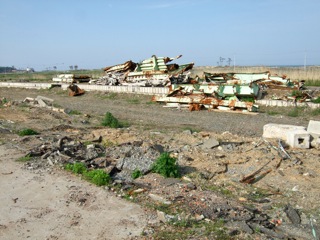
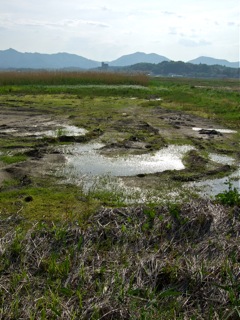
The whole scene reminded me of two poems. The first by Tu Fu, the second by Basho.
“The whole country devastated,
only mountains and rivers remain.”
“Summer grasses:
all that remains of great soldiers’
imperial dreams”
A little further down we came upon an old woman with a floppy hat and a hoe. We stopped to talk with her and she told us her story. She was standing where her large traditional farmhouse had been. There were huge rocks that had been part of her Japanese garden. And to one side gracious violet poppies were bobbing in the wind. “I used to plant these every year,” she told us, “but of course, I couldn’t last year. But somehow the seeds survived the tsunami and now there is this beautiful patch of flowers. There’s nothing else left. But the flowers are so kind, so I come here whenever I can, just to look at them.”
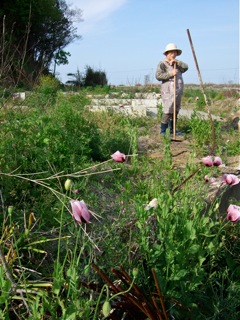
Then she told us how she and the other family members had headed for high ground as soon as the earthquake hit. “We knew we had very little time, especially because our house was so close to the sea. So, we raced away without taking anything. Now all we have is our lives, but the government is allowing us to stay in a temporary home for a while. After that we have no idea. We are old and have no jobs. We really don’t know what we are going to do.”
The problems up the entire coast from Fukushima to the tip of Iwate are huge. What to do with the devastated land? Most of it is privately owned, so the government cannot step in and force everyone to leave for good. It would like to, though, because then administratively things would be a lot easier. The entire coastal area could be turned into parks, with fish factories and warehouses beyond them, and residential areas the furthest from the life-giving, but threatening sea. But many people along the coast have died. And others do not want to give up their ancestral property. Japan works by consensus. In theory that means everyone is given a say and everyone’s wishes and ideas are taken into account. So negotiations are painfully slow.
In the meantime, people wait. They wait even as they look for work. They wait even as they return to their now empty land to feel a sense of roots and continuity. They wait as the prefecture and national governments go back and forth as to policy. They wait even as Tokyo Electric Company begrudgingly pays compensation money to people in Fukushima’s nuclear area. Everything seems to be on hold.
Is there hope? It is hard to say. Alcoholism, drug abuse, and suicides continue to rise. Many, many feel a deep, dark sense of despair. Yet, too, there is a strong sense of resignation. But a sense of the future? No, not now. Not yet . . .
Or is there? As we drove by a wide area now empty of homes, we saw a small, newly built Shinto shrine. It was sitting in the center of a family’s lot, by itself, clear and strong. Although it had been placed there to honor the deceased and to protect the spot from further harm, its presence seemed to exude a sense of gentle, but pervasive defiance. It stood there, “strong in the rain, strong in the wind” (1), simply refusing to accept defeat. It was solitary, but surely not alone. In fact, it seemed decidedly pregnant with the hope of better and happier times to come.

(1) From Miyazawa Kenji’s poem “Strong in the Rain”
Ishinomaki, 11 Months Later
- At July 26, 2016
- By anneblog
- In Annes Letters
- 0
February 29, 2012
Dear Family and Friends,
One of the most unsettling and surprising things in eastern Tohoku is the unevenness of the clean up work. A once damaged area may be pretty much bare by now. But even so, there might be an apartment building still standing with people living on the top floors. The rest of the structure might be broken and smashed up, but the second or third stories might have laundry hanging out on the veranda. Or a bicycle might be leaning against a wobbly pole that more or less held up the entire building.
Read More»Arahama, 11 Months Later
- At July 26, 2016
- By anneblog
- In Annes Letters
- 0
Mid-February 2012
Dear Family and Friends,
Recently a friend and I went north of Sendai to Kesennuma to learn firsthand how things were almost one year after the Great East Japan Earthquake and Tsunami. This week different friends and I ventured closer to home to hear stories of people who used to have homes and work near the sea. We went to Arahama, one section of widely spread out Sendai City. We talked with four courageous souls. Each person had a story. Each tale was unique. But the underlying theme was the same: “We lost everything. The future is uncertain. We can only do what we can today.”
Read More»Kesennuma, 12 Months Later
- At July 26, 2016
- By anneblog
- In Annes Letters
- 0
February 11, 2012
Dear Family and Friends,
It has been a long time since I wrote to you. For me personally life has resumed a degree of normalcy. I go to work, I shop for food, I write, and I try in my own ways to be involved in the relief efforts going on here. Those activities are time and energy consuming, so my letters to all of you have become far less frequent.
When I have time I go out to areas still struggling, more so even that Sendai, to get their feet back on the ground. We have come very far, but we still have much to do. In fact, amazingly just the other day a cluster of bodies from the tsunami were found and identified. So, yes, our work is far from over.
Yesterday I went north to Kesennuma. Maybe you remember hearing of that port town, one of the most severely damaged by the tsunami. I went exactly eleven months after the Great Eastern Japan Earthquake and Tsunami. Somehow that seemed appropriate for a day of observation, admiration, and wonder.
Kesennuma was freezing cold with winds that cut and sliced. But even so, my friend and I set off walking from the small train station perched on a hill, down to the port area, our focus of interest. We were surprised that the beautiful old buildings near the station were in relatively fine shape. They were standing and had few cracks. Even the tile roofs were in tact, unlike those in Sendai and her surrounding areas.
Read More»Class Project: Helping the Homeless
- At July 26, 2016
- By anneblog
- In Annes Letters
- 0
November 6, 2011
Dear Family and Friends,
One of the classes I teach is Writing I. It is a required basic writing course. The Japanese teachers who also have this class usually do translations, one unrelated sentence after another, from Japanese to English and back again. My Japanese simply is not up to such levels of sophistication, so my instruction focuses more on how to write coherent essays and on Western thought processes. Among other things, that means how to organize thoughts in a logical, cohesive manner, how to write paragraphs, and how to begin and end their compositions. My students must write one essay a week. The topics vary. Since Japanese youngsters tend to be several years behind their Western counterparts developmentally, the themes they write about are simple and personal. They might be “My Hometown,” “My Part-time Job,” “My Free-time Activities”, or “How Music Influences My Life.”
This academic year my students’ work in the first semester (from April to August) was better than usual, so I decided to do something different in the second term. During the summer break when I traveled a bit in the Tohoku area, I witnessed a lot of the devastation from the earthquake and tsunami, of course. But along side that, I became acutely aware of the admirable and much appreciated work being done by NGOs. The most renown is the Red Cross. But Doctors Without Borders, Save the Children, and even Habitat for Humanity are also contributing immeasurably. I was so deeply touched by the selfless service of those organizations that I wanted to convey their spirit to my students.
Read More»Frogs in Fukushima
- At July 26, 2016
- By anneblog
- In Annes Letters
- 0
October 10, 2011
Dear Family and Friends,
According to Wikipedia The Congregation of Notre Dame is a Roman Catholic order that was founded in Montreal, Canada in 1653 by Marguerite Bourgeoys. However, other sources claim that that organization doing good works began in France and later branched out into Canada, where it offered education to children, especially native girls. The facts about the early history of the order are probably not as important as the work the nuns continue to do even today. The sisters vow to a life that is “little, simple, and poor”. And their main focus is education. This order can now be found in nine countries, one of which is Japan. In fact, there is a Congregation of Notre Dame in Fukushima.
During World War II, in 1932 to be exact, five sisters opened a convent school in Fukushima City. Now that institution has a kindergarten, an elementary, junior and senior high school, and a junior college. It also has expanded to offer classes to adults in the community. There is also a residency for the nuns.
Read More»Ishinomaki September 2011
- At July 26, 2016
- By anneblog
- In Annes Letters
- 0
September 18, 2011
Dear Family and Friends,
Recently a friend visited me. At the end of his stay, I escorted him to Narita Airport to see him off. It was very eerie there with a paucity of travelers. Only a few passengers were wandering about, and very few of them were westerners. Even so, the staff members politely maintained their routine behaviors of bowing and giving assistance when needed. Ueno Station in Tokyo, usually a bubbling hub, was also strangely quiet. That was because business hours are now staggered to put less of a strain on energy usage during peak hours. And all businessmen wear short sleeved shirts with no jackets or ties. The trip back home up the coast revealed city after city with dimmed lights, making it feel as if the country were experiencing war. But none of that was due to armed conflict, but rather to energy conservation measures now that nuclear power is in question. I was impressed that everyone without protest was complying with the government’s request to cut back on energy consumption.
Read More»Kids’ Festival & Frogs
- At July 25, 2016
- By anneblog
- In Annes Letters
- 0
August 25, 2011
Dear Family and Friends,
Higashi Matsushima is one Japanese town very badly hit by the March 11 earthquake and tsunami. In fact, most of the area was completely devastated. And that included an army base with very expensive aircraft. But since then everyone has been working hard to pull themselves back together, both as individuals and as a community. It has not been easy and there are still years of work ahead, but little by little life is moving forward into a future of hope and stability.
Usually every summer late in August there are many festivals all over Japan. Some are large and famous. Others are small and local. The authorities in Higashi Matsushima wanted to cancel their small summer celebration this year, but the locals begged them to hold it despite the devastation everywhere. Luckily, those in charge complied, and a marvelous event ensued. In fact, one local told me it was the largest festival ever, drawing people from far away places as well as those who resided nearby.
Very touchingly the theme this year was “Gratitude”. Gratitude to be alive. Gratitude to be able to start again. Gratitude for all the help this region — including Higashi Matsushima — has been receiving. So, rather than being inwardly focused, this year’s festivities reached out to embrace the world. In fact, the staff’s T-shirts had either “Hope” written on them, or a fanciful drawing of people of all nationalities holding hands and circling the globe. The back had “Thank you” in seven different languages, one for each of the countries that sent volunteers to this region. And indeed, every heart present at the festival was brimming with gratitude and thanks for so much, despite the major losses everyone shared.
Read More»Angels’ Voices
- At July 24, 2016
- By admin
- In Annes Letters
- 0
Minami San Riku Cho is a village adjacent to Kesen-numa. Both are in Miyagi Prefecture, but far north of Sendai. Like every other place along the coast, Minami San Riku Cho, has many stories about its uneasy relationship with the tsunami of 03/11. Of course, the port was totally damaged, houses were smashed to oblivion, and thousands of people were displaced or drowned. Yet, despite the overwhelming devastation and ongoing challenges of rebuilding, there are some very beautiful touches of hope and of humanity. Several of them lie in the courage that can come from honoring heroes. Others are found in deep respect for the people working against all odds to urge life forward.
Matsumura Naoto San: Standing Up for the Animals Left Behind
- At March 04, 2012
- By admin
- In Annes Letters
- 0

Naoto Matsumura is a well-known name among animal advocates worldwide. He is the brave soul who defied Japanese government orders to leave his hometown, Tomioka, after the Fukushima Nuclear Power Plant explosion. He stayed on and now cares for the animals left behind.
Recently a friend of mine, Nanci Caron, started a fundraiser to support Matsumura San and his cause. Although she was not a member of any particular animal advocacy group, she asked her friends, family members, and colleagues for “coffee money”. Many gladly gave. In fact, some gave much more. Soon, individuals from all over the globe became aware of the Chip In Fund, and also sent contributions.
Read More»‘Letters’ Post-Earthquake and Tsunami Japan Relief Effort Receives Substantial Donation
- At March 03, 2012
- By Brian Penry
- In Book News
- 0
The ‘Letters’ post-earthquake and tsunami Japan relief effort is delighted to announce a major donation which was received recently from The Roosa Fund – a U.S. based, donor- advised endowment. We are most grateful to be able to put this generous gift to work in afflicted areas of Japan right away, where it is needed most – on the ground and from the heart.
An outgrowth of the Roosa Family’s long standing philanthropic efforts, The Roosa Fund (pronounced “Rosa”) was established in 2011, along with an affiliate donor-advised fund, The Hartford Foundation for Public Giving. The Roosa Fund primarily addresses worthy, charitable needs on two fronts: in its home state of Rhode Island, and programs that serve the poor in developing nations.
Read More»

